



Politics
Vijay's Delimitation Position Sparks Political Controversy in Tamil Nadu as Opposition Alleges 'U-Turn'
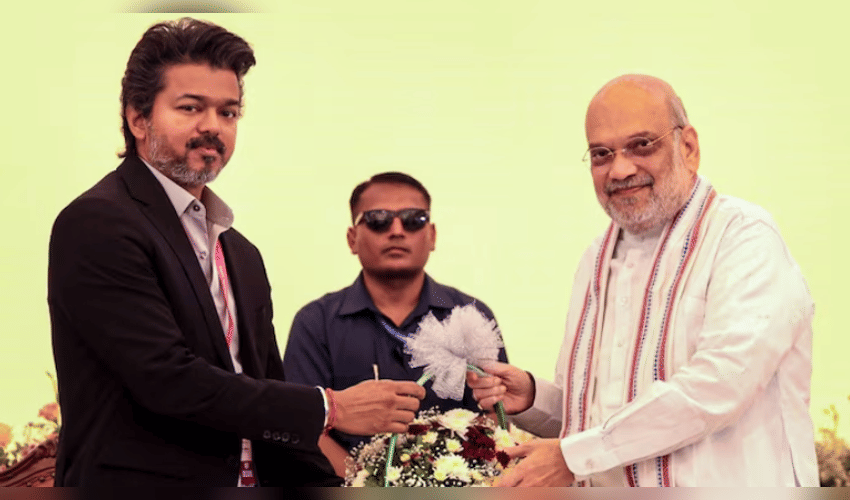

Tamil Nadu Chief Minister C. Joseph Vijay’s position on parliamentary delimitation has triggered a political controversy in the state, with Opposition parties accusing him of diluting his earlier stand and making a “U-turn” on the issue. The controversy follows Vijay’s recent remarks at the Southern Zonal Council meeting, where he called for a legislative safeguard to ensure that states do not lose their existing share of parliamentary representation because of population-based delimitation.
Vijay’s latest position has drawn attention because the Tamil Nadu Assembly had earlier adopted a resolution seeking stronger protection for the state’s representation in Parliament. The resolution called for the existing strength of 543 Lok Sabha seats and the current distribution of seats among states to be maintained.
After the Assembly passed the resolution, Vijay had also written to Prime Minister Narendra Modi, urging the Centre to consider Tamil Nadu’s concerns over the proposed delimitation exercise. At the Southern Zonal Council meeting, Vijay focused on protecting the existing percentage of representation of states rather than specifically reiterating the demand for a permanent freeze of the Lok Sabha at 543 seats.
The change in emphasis has given the Opposition an opportunity to attack the Tamil Nadu government. The DMK has questioned why Vijay’s government adopted a specific position in the Assembly before moving towards a broader formulation at the zonal council meeting. Opposition leaders have also linked the controversy to Vijay’s recent meeting with Union Home Minister Amit Shah. They have questioned whether discussions with the Centre influenced the chief minister’s latest position.
The TVK, however, has rejected the criticism and maintained that there has been no fundamental change in its stand. The party argues that protecting Tamil Nadu’s existing share of parliamentary representation remains the central objective and that Vijay’s latest remarks were intended to place the issue before a wider southern regional forum.
The delimitation debate has become particularly sensitive in Tamil Nadu and other southern states because of concerns that a population-based redistribution of Lok Sabha seats could alter the current balance of political representation. Southern states have traditionally argued that they should not be penalised for successfully implementing population-control measures. Tamil Nadu, in particular, has highlighted its progress in reducing population growth while developing its economy and improving social indicators.
The issue is therefore not limited to the number of Lok Sabha seats. It has also become part of a broader debate over federalism, political representation and the relationship between population growth and parliamentary power. The Opposition’s “U-turn” charge now puts Vijay under pressure to clarify whether his government continues to support the Assembly’s demand for maintaining the 543-seat structure or whether it is moving towards a different formula that would protect the existing share of representation without necessarily freezing the total number of seats.
With delimitation expected to remain a major national political issue, Tamil Nadu’s position is likely to receive continued attention. For Vijay, the challenge will be to demonstrate that his government’s latest formulation is consistent with its earlier commitment to safeguarding the political representation of Tamil Nadu and other southern states. The political dispute also highlights how sensitive the delimitation question has become ahead of any future exercise to redraw parliamentary constituencies. What began as a constitutional and administrative issue has increasingly turned into a major political debate over the future balance of power between India’s states.



