



Economy
US DOJ Defends Huawei Conviction, While Chinese Tech Giant Denies Allegations
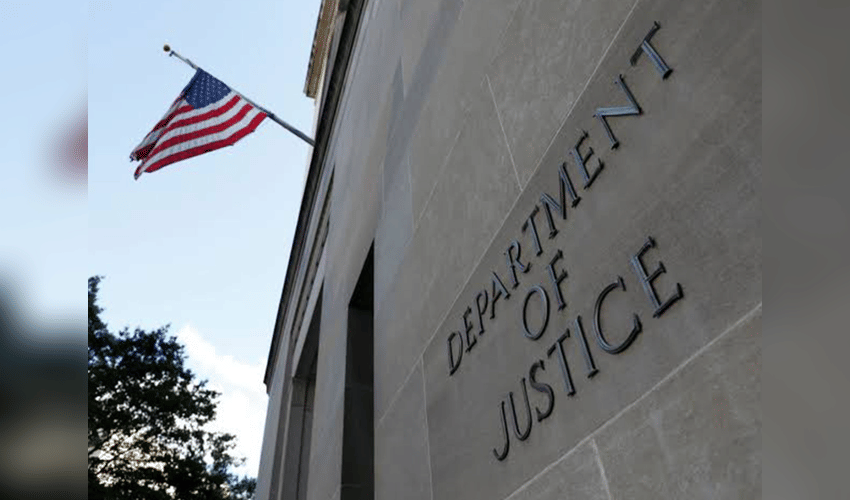

The US Department of Justice (DOJ) has defended the conviction of Chinese telecommunications company Huawei, accusing it of violating American laws, supporting hostile entities and posing risks to US national security. The remarks came after a federal jury found Huawei and three of its subsidiaries guilty of several criminal offences following a three-month trial in the Eastern District of New York. The charges against Huawei included violations of US sanctions relating to Iran, bank fraud, money laundering and the unlawful acquisition of trade secrets belonging to American technology companies.
Reacting to the verdict, M. Scott Proctor, Acting Principal Deputy Assistant Attorney General of the DOJ's National Security Division, said Huawei had broken US laws, strengthened adversaries and undermined national security. Proctor said the conviction demonstrated the department's determination to ensure that companies such as Huawei were held legally accountable for their actions in American courts.
According to a DOJ announcement, the jury returned guilty verdicts against Huawei Technologies Co. Ltd. and three affiliated companies: Huawei Device Co. Ltd., Futurewei Technologies Inc. and Huawei Device USA Inc. Prosecutors alleged that Huawei had pursued a long-running strategy involving business activities in Iran, the theft of confidential intellectual property from US companies, misleading disclosures to financial institutions and money laundering to strengthen its global telecommunications operations.
US Attorney General Todd Blanche also defended the outcome, stating that no individual or corporation was exempt from the law. He accused Huawei and its subsidiaries of relying on deception and the theft of proprietary information while conducting business in the United States. A major part of the prosecution's case focused on Huawei's alleged involvement in Iran's telecommunications sector. According to the DOJ, the company provided infrastructure and related services that expanded internet and mobile network access in the country. Prosecutors further claimed that its technology and services helped Iranian authorities monitor online activity, restrict internet access and oversee public demonstrations through surveillance systems.
The department also alleged that Huawei conducted its Iranian operations through an entity called Skycom while concealing the nature of its business relationship with the organisation. Prosecutors claimed the company repeatedly provided misleading information about Skycom and its activities to banks, media organisations and US authorities. The jury found Huawei guilty of participating in a conspiracy to obtain trade secrets from several American technology companies. The businesses named in the allegations included T-Mobile, Cisco, Fujitsu, CNEX and Quintel.
Huawei, however, strongly disputed the government's position and highlighted its acquittal on the Racketeer Influenced and Corrupt Organizations (RICO) charge. The company welcomed the jury's decision, arguing that the acquittal supported its longstanding position that the government's allegations lacked a factual foundation. Huawei said it had consistently challenged the case over the past eight years.
The company also rejected the remaining charges, describing them as lacking both legal and factual justification. Addressing the intellectual property allegations, Huawei argued that the five disputes cited by prosecutors involved civil cases that had been resolved over the previous two decades. It maintained that no court had found the company guilty of deliberately misappropriating trade secrets or ordered it to pay damages for such conduct.
Huawei said it would examine the jury's findings and pursue all available legal remedies to protect its rights and business interests. The jury's guilty verdicts covered several offences, including conspiracy to steal trade secrets, wire fraud, bank fraud, conspiracy to defraud the United States, violations of the International Emergency Economic Powers Act (IEEPA) and conspiracy to commit money laundering. The convictions could result in significant financial consequences for Huawei and its subsidiaries. Potential penalties include criminal fines, asset forfeiture and restitution. The court has scheduled sentencing for September 14, 2027, when a federal judge will determine the punishment after reviewing applicable sentencing guidelines and other legal considerations.
Despite the legal setback, Huawei emphasised the scale of its global operations and technological investments. The company said it conducts business in more than 170 countries and regions, holds over 165,000 active granted patents and has invested more than USD 270 billion in research and development since 2007. Reaffirming its corporate position, Huawei said it remains committed to ethical business practices, intellectual property protection and compliance with applicable laws and regulations.
Disclaimer: This image is taken from ANI.