



World
Trump Warns Iran: US Will Resume Bombing if Nuclear Deal Not Reached
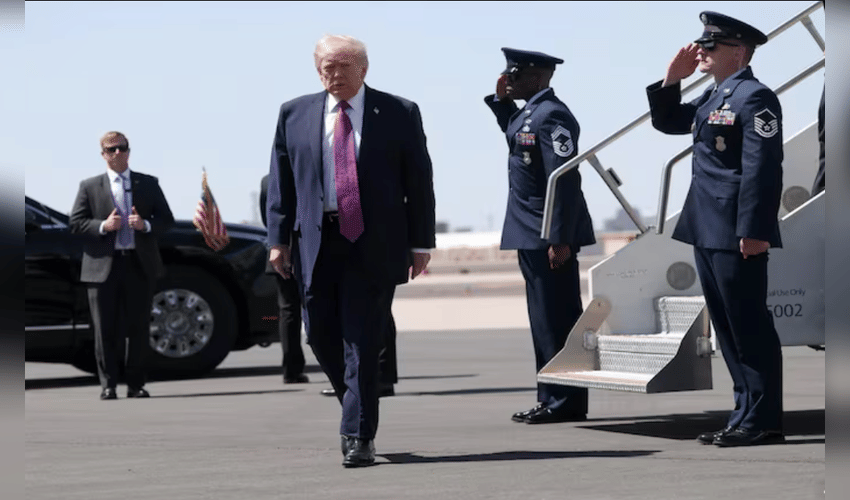

US President Donald Trump has issued a stark warning that Washington will resume bombing Iran if a new nuclear and security agreement is not reached by the looming deadline, escalating pressure on Tehran amid stalled negotiations over its nuclear program. Speaking from Air Force One on Saturday, Trump linked the continuation of the naval blockade in the Strait of Hormuz to the fate of the talks, signaling a shift toward a more aggressive stance if diplomacy collapses. This announcement comes as global tensions spike over the strategically vital waterway, which handles about one-fifth of the world's oil shipments.
Trump framed the blockade as a temporary measure, describing it as a "friendly" form of pressure that would end only if Iran agrees to restrict its nuclear capabilities and missile activities. Flanked by senior aides, he warned that failure to secure a deal would lead to a "much more unfriendly" approach, explicitly referencing the resumption of airstrikes. "We'll have to start dropping bombs again," he stated, emphasizing that the US military remains on high alert in the Gulf with carrier groups, bombers, and missile-defense systems deployed nearby.
Analysts note this as classic Trump brinkmanship—combining public deadlines, visible military buildup, and limited strikes to push for concessions without triggering full-scale war. The president's remarks followed earlier warnings in February, where he set a 10-15 day window for Iran to comply, hinting at "bad things" if no progress was made.
Iran's government has dismissed Trump's claims as "false," insisting that national sovereignty and security cannot be bargained under threat. Hardline factions in Tehran have retaliatory threats against US bases and allies in the region, raising fears of miscalculation in a volatile standoff. The Strait of Hormuz remains a flashpoint, with any prolonged disruption potentially triggering global oil price spikes and destabilizing markets worldwide, including India's energy-dependent economy.
The risk lies in the gap between public posturing and private diplomacy—Trump has previously reversed course after deadlines, but unpredictability could spark wider conflict if signals are misread. Officials from both sides engage in back-channel talks, even as the clock ticks toward the April 20 deadline tied to the Strait's reopening.
A failure leading to renewed bombings could send crude oil prices soaring, strain allied Gulf states hosting US forces, and disrupt supply chains across Asia. For India, Malaysia, and others, higher fuel costs threaten inflation and industrial stability, pushing policymakers toward diversified energy strategies. The US military buildup continues, with officials monitoring for any Iranian escalation, while markets watch for signs of de-escalation or breakthrough.
Risk analysts warn that the current stalemate heightens the chance of unintended escalation, though diplomatic channels remain open. The outcome will hinge on how much compromise both nations offer—Washington on easing sanctions and Iran on nuclear limits—amid mounting global scrutiny.