



News
Pakistan Surrounded by Airstrikes on Afghanistan, Faces Criticism from All Sides
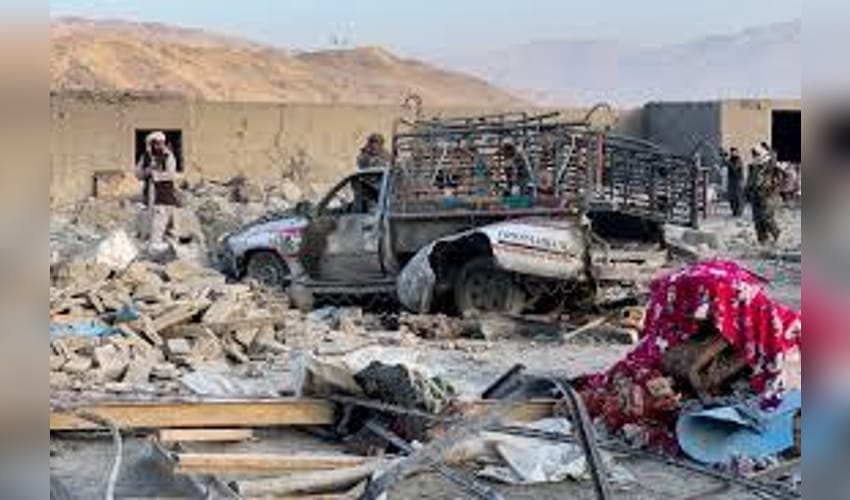

Pakistan is once again at the center of international controversy after launching a fresh series of airstrikes inside Afghanistan, a move that has intensified regional tensions and triggered criticism from multiple directions. While Islamabad insists the operations were aimed at militant hideouts responsible for cross-border terrorism, Afghan authorities, international organizations, and neighboring countries have raised concerns over civilian casualties, violations of sovereignty, and the growing risk of a wider conflict.
The latest strikes reportedly targeted areas in Afghanistan's eastern provinces of Paktia, Paktika, and Kunar following a deadly militant attack that killed Pakistani security personnel. Pakistan's government stated that the operation was directed against militant organizations such as the Tehreek-e-Taliban Pakistan (TTP) and allied groups that Islamabad accuses of operating from Afghan territory. According to Pakistani officials, the strikes were part of a counterterrorism campaign designed to eliminate threats before they crossed the border.
However, Afghanistan's Taliban-led administration has strongly rejected Pakistan's justification. Kabul accused Islamabad of violating Afghan sovereignty and claimed the attacks struck civilian homes, leaving dozens of civilians dead and many more injured. Afghan officials condemned the operation as an act of aggression and warned that continued military action would have consequences for bilateral relations.
The dispute reflects a relationship that has deteriorated sharply since the Taliban returned to power in Afghanistan in 2021. Pakistan initially expected that a Taliban government would help curb anti-Pakistan militant groups, but instead Islamabad has repeatedly accused Kabul of allowing TTP fighters to use Afghan territory as a safe haven. The Taliban authorities deny these allegations and argue that Pakistan is using Afghanistan as a scapegoat for its own internal security failures.
International concern has grown because of the humanitarian impact of the latest strikes. The United Nations Assistance Mission in Afghanistan (UNAMA) reported significant civilian casualties and urged both countries to exercise restraint, protect civilians, and return to dialogue. Humanitarian agencies have repeatedly warned that continued military escalation threatens vulnerable communities already facing economic hardship and displacement.
Pakistan has also faced diplomatic criticism from neighboring India, which described the strikes as a violation of Afghanistan's sovereignty and a threat to regional stability. India's Ministry of External Affairs characterized the attacks as a "blatant act of aggression" and argued that military actions causing civilian casualties undermine peace in South Asia.
The latest developments add to Pakistan's growing diplomatic challenges. Islamabad is simultaneously dealing with domestic militant violence, economic difficulties, and increasingly strained relations with Afghanistan. Border closures, repeated exchanges of fire, and mutual accusations have disrupted trade and complicated efforts to stabilize the frontier. Analysts warn that each new military operation deepens mistrust and makes diplomatic engagement more difficult.
Security experts note that Pakistan's military strategy reflects the country's frustration over persistent cross-border attacks. Islamabad argues that it cannot ignore militant sanctuaries allegedly operating just across the border when attacks continue to target its soldiers and civilians. From Pakistan's perspective, cross-border strikes are presented as defensive measures rather than acts of aggression. However, critics argue that such operations risk causing civilian casualties while failing to address the deeper political and security challenges driving militancy.
The current crisis also highlights the limitations of military solutions. Despite several previous rounds of airstrikes, militant violence has continued, suggesting that tactical operations alone may not eliminate long-standing insurgent networks. Regional observers argue that intelligence cooperation, border management, and sustained diplomatic engagement are essential components of any lasting solution.
International mediation efforts have so far produced only temporary pauses in fighting. Countries including China have encouraged dialogue between Islamabad and Kabul, while international organizations have repeatedly called for de-escalation. Yet mutual distrust remains high, with both governments accusing each other of supporting forces that threaten regional security.
The broader regional implications cannot be ignored. Continued instability along the Afghanistan-Pakistan border threatens trade routes, refugee movements, and economic recovery across South Asia. It also risks creating conditions that extremist organizations could exploit, further complicating efforts to achieve lasting peace.
For Pakistan, the latest airstrikes represent a difficult balancing act between responding to domestic security threats and managing international opinion. While the government maintains that it has the right to defend itself against cross-border terrorism, the growing criticism from Afghanistan, international organizations, and regional actors underscores the diplomatic costs of such operations. At the same time, Afghanistan insists that respect for sovereignty and civilian protection must remain central to any effort to combat militancy.
As both countries continue to exchange accusations, the possibility of further escalation remains a serious concern. Without renewed diplomatic engagement and effective mechanisms to address cross-border militancy, the cycle of violence appears likely to continue, leaving civilians on both sides of the border to bear the greatest burden.
Disclaimer : This image is taken from CNN.