



News
Pakistan's Strategic Tightrope: Shehbaz Sharif Caught Between Washington, Tehran and a Restless Home Front
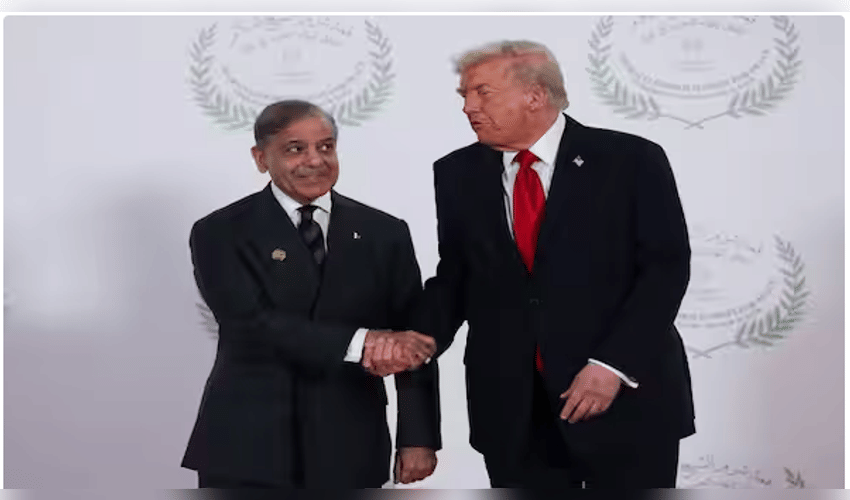

One cannot help but feel a measure of sympathy for Shehbaz Sharif. Burdened with responsibility but constrained in authority, Pakistan’s prime minister finds himself navigating crises not entirely of his own making. With General Asim Munir casting a long shadow over decision-making, Sharif’s room to manoeuvre appears limited, and his efforts often fall short of expectations.
The latest geopolitical shock has placed Islamabad in an unenviable position. Following a joint US-Israeli operation that reportedly eliminated Iran’s Supreme Leader Ayatollah Ali Khamenei and several senior military figures, Pakistan has been forced into a precarious balancing act. Economically dependent on Washington and wary of jeopardising IMF support, Islamabad cannot afford to alienate the United States. At the same time, public sentiment at home—deeply critical of American and Israeli actions—has erupted in anger.
The economic tremors were immediate. Pakistan’s stock market plunged, with trading temporarily halted amid panic. Any disruption in IMF assistance could push the already fragile economy toward default. For a government struggling to stabilise finances, the stakes could not be higher.
Yet the domestic fallout has proven equally volatile. Pakistan, a Sunni-majority nation with a significant Shia minority—around 15 percent of the population—hosts one of the world’s largest Shia communities after Iran and Iraq. A 2015 Pew survey indicated that Pakistan stood out as a country where Iran enjoyed majority public favourability. The reported killing of Khamenei triggered widespread protests, exposing deep sectarian and ideological fault lines.
In Karachi, demonstrators reportedly attempted to breach the US consulate, leading to clashes in which at least 10 people were killed and dozens injured. Violence spread to other regions, including Gilgit and Skardu, where fatalities were also reported. Protests erupted near US diplomatic facilities in Lahore and Islamabad. The unrest forced authorities to deploy troops and impose a three-day curfew in Gilgit-Baltistan.
The turmoil underscores the limits of Pakistan’s long-standing strategy of hedging between major powers. For decades, Islamabad has leveraged its geostrategic position to extract support from competing global actors. But the current crisis suggests that insulating domestic politics from foreign policy gambits is becoming increasingly difficult.
Sharif’s initial response reflected this delicate calculus. He refrained from directly condemning the United States, focusing instead on criticising Israel’s actions. In a statement following discussions with Saudi Crown Prince Mohammed bin Salman, Sharif emphasised solidarity with Saudi Arabia and Gulf partners, condemning regional escalation without explicitly naming Washington. The careful wording highlighted Islamabad’s reliance on US support while maintaining ties with Riyadh under their strategic defence cooperation framework.
Only after public outrage intensified did Sharif publicly express condolences over Khamenei’s death and extend solidarity with the Iranian people. Even then, he avoided referencing the US role in the operation. The cautious diplomacy pleased few—neither the international community nor a domestic audience demanding clarity.
Compounding matters, Pakistan’s regional security calculations are under strain. The once-strategic reliance on the Afghan Taliban for “strategic depth” against India has backfired. Recent clashes along the Afghan border have reportedly targeted Pakistani military installations, including sensitive facilities near Rawalpindi. Casualties have been reported on both sides, with competing claims over territorial control and military losses.
Meanwhile, expectations of reciprocal support under Pakistan’s defence understanding with Saudi Arabia have not translated into tangible assistance. Riyadh’s response has remained largely rhetorical.
With the possibility of refugee inflows from Iran, unrest at home, and instability along the Afghan frontier, Sharif confronts a convergence of crises. Pakistan’s foreign policy—long defined by complex alignments and strategic manoeuvring—now appears stretched thin. The country’s attempt to master geopolitical contradictions has left it navigating a narrowing corridor between economic dependence abroad and ideological turbulence at home.
For Prime Minister Shehbaz Sharif, the challenge is no longer merely diplomatic. It is existential.