



News
Pakistan's Mediation Bid: Diplomacy or Strategic Posturing ?
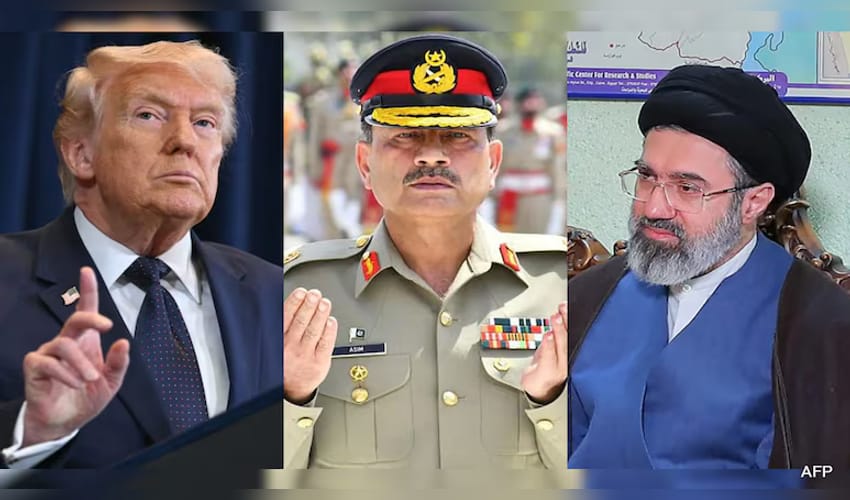

As tensions escalate in the ongoing Iran–US conflict, Pakistan has once again stepped forward, offering itself as a mediator and even proposing Islamabad as a venue for talks. While this move may appear constructive on the surface, a closer examination raises serious questions about intent, credibility, and capability.
Recent reports suggest that Pakistan is among several countries attempting to facilitate backchannel communication between Washington and Tehran, with Islamabad even being floated as a possible site for negotiations. However, there is little concrete evidence that such talks are either imminent or meaningful. Iran has explicitly denied direct engagement with the United States, while the White House has stopped short of confirming any formal meeting in Pakistan.
Pakistan’s attempt to position itself as a key diplomatic broker is not new. Historically, Islamabad has often sought relevance in global geopolitics by inserting itself into crises beyond its immediate sphere. In the current case, the mediation offer appears less about resolving conflict and more about projecting international importance and diplomatic visibility.
Despite claims of neutrality, Pakistan’s actual influence over either Iran or the United States remains limited. Maintaining working relations with both sides does not automatically translate into leverage. Past efforts at mediation have yielded little success, and even Pakistani officials have acknowledged that earlier diplomatic initiatives struggled to gain traction.
The country’s credibility as a neutral mediator is further weakened by its own internal and regional challenges. Ongoing security concerns along its western border and controversial military operations raise doubts about its ability to act as a stabilizing force. Effective mediation requires trust and consistency, both of which appear fragile in the current context.
Iran’s outright denial of talks and skepticism toward US claims highlights the uncertain and opaque nature of the diplomatic environment. In such a scenario, Pakistan’s role appears peripheral rather than central. Even if Islamabad were to host talks, the likelihood of a meaningful breakthrough remains slim, given the complexity of the issues driving the conflict.
At the same time, other regional players with deeper influence and more established diplomatic channels are already involved in mediation efforts. This makes Pakistan’s bid seem less decisive and more redundant, reinforcing the perception that the move is driven by symbolism rather than substance.
Pakistan’s mediation push can also be seen as a form of strategic signaling. It projects an image of responsibility and engagement on the international stage, while also serving domestic political narratives and attempting to balance relationships across competing regional powers. However, signaling without tangible outcomes carries risks. If such efforts fail to produce results, they may further erode the country’s diplomatic credibility.
Pakistan’s attempt to act as a mediator in the Iran–US conflict reflects ambition, but not necessarily capability. Effective mediation demands trust, influence, and consistent engagement. Without these, the effort risks being viewed not as genuine peacemaking, but as geopolitical posturing aimed at visibility rather than results.
Disclaimer: This image is taken from NDTV.



