



World
Pakistan's Balochistan Crisis Deepens as Airstrikes Follow BLA's Claimed Attacks on Security Forces
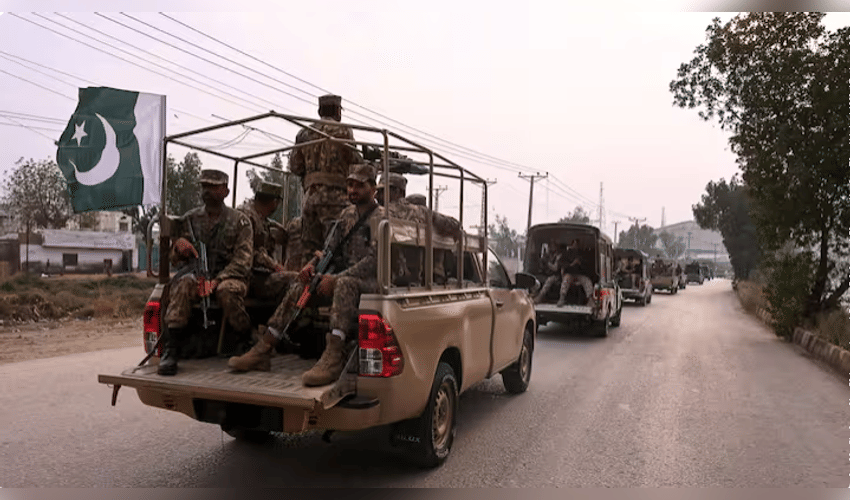

Pakistan’s worsening security crisis in Balochistan has taken a further turn, with Pakistani forces carrying out airstrikes across the province after the Baloch Liberation Army (BLA) claimed responsibility for a series of attacks on military and police targets. According to reports cited by CNN-News18, Pakistani airstrikes in Surab and Gwadar reportedly killed at least 21 civilians, including women and children.
The strikes came after the BLA claimed that its fighters had killed 32 Pakistani soldiers in attacks carried out across Balochistan during August. The militant organisation subsequently launched further attacks against security installations and personnel as Pakistani forces continued their operations. The reported escalation highlights the growing difficulty faced by Pakistan’s security establishment in containing the decades-old insurgency in its largest province.
According to reports, BLA fighters carried out attacks at several locations, including a police station in Chagai district, a military camp in Jhao, a security forces convoy on the Khuzdar RCD Highway and military vehicles near Wadh. Security checkpoints in Manguchar Bazaar were also targeted, while commercial vehicles were attacked and a truck was hijacked in Yakmach.
Earlier, Pakistani authorities claimed that security forces had killed 10 insurgents during clashes in Balochistan. Authorities also said a vehicle carrying explosives detonated prematurely, killing 11 people, including eight individuals involved in preparing the explosives and three civilians inside a nearby house.
The rapidly escalating violence underscores the widening gap between Islamabad’s security strategy and the grievances that have fuelled unrest in Balochistan for decades.
Balochistan is Pakistan’s largest province by area and possesses significant deposits of minerals and other natural resources. Yet the province remains one of the poorest parts of the country. Local communities have repeatedly accused the federal government of exploiting Balochistan’s resources without delivering adequate economic development, political representation or public services.
Baloch nationalist groups have also accused Pakistan’s security establishment of enforced disappearances, arbitrary detention and heavy-handed military operations. Islamabad has rejected allegations of systematic abuses and maintains that its security forces are fighting armed insurgent organisations responsible for attacks on civilians and state institutions.
The BLA, meanwhile, has pursued an armed campaign demanding independence from Pakistan. Its attacks have increasingly demonstrated the ability of insurgents to strike security forces, transport routes and government installations across a geographically vast and difficult province. For Pakistan, the continuing violence represents more than a conventional counterinsurgency challenge. It exposes persistent weaknesses in governance and security across Balochistan and raises questions about Islamabad’s ability to address the political and economic grievances underlying the conflict.
The latest reports of civilian deaths in Pakistani airstrikes are likely to intensify scrutiny of the military’s approach. At the same time, the BLA’s attacks on police and military personnel demonstrate the serious threat posed by armed separatist groups. The cycle of insurgent violence followed by military retaliation risks pushing the province into an even deeper security and humanitarian crisis.



