



Military
Operation Sindoor: How India Forced Pakistan to Rethink Its Nuclear Strategy
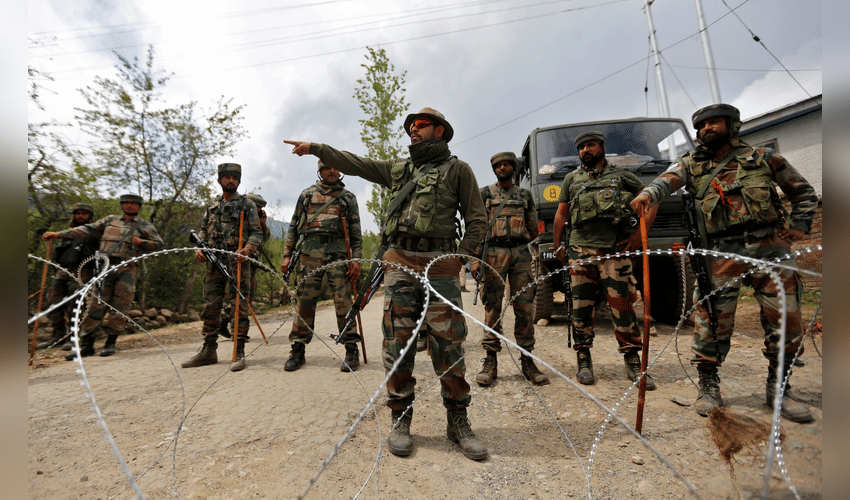

In one of the most decisive military operations in recent history, India’s Operation Sindoor has not only neutralized major terror networks across the border but also compelled Pakistan to rethink its long-standing nuclear playbook. The high-precision strikes carried out in May 2025 are now seen as a major inflection point in South Asian military strategy. According to defense and strategic experts, India’s bold military action exposed the vulnerabilities of Pakistan’s “full-spectrum deterrence” doctrine — a strategy Islamabad has relied upon for decades to prevent Indian retaliation against terror attacks by keeping nuclear thresholds deliberately vague.
A Decisive Response After the Pahalgam Attack: Operation Sindoor was launched after the horrific Pahalgam terror attack on April 22, which left 26 civilians dead. Within days, Indian forces executed coordinated air and missile strikes targeting nine major terrorist installations linked to Lashkar-e-Taiba, Jaish-e-Mohammed, and Hizbul Mujahideen across Pakistan and Pakistan-occupied Kashmir. Indian officials described the mission as “non-escalatory,” emphasizing that the targets were limited to terrorist infrastructure. Despite Pakistan’s attempts to portray the strikes as cross-border aggression, global responses largely backed India’s right to self-defense under international law.
Nuclear Deterrence Put to the Test: For years, Pakistan’s nuclear arsenal served as a shield, deterring India from deep, conventional responses to terror provocations. But Operation Sindoor shifted that calculus. Despite early threats from Islamabad and the movement of tactical nuclear assets, Pakistan held back from crossing the nuclear threshold.
This restraint, analysts say, demonstrated that Pakistan’s nuclear threats were more political than operational — a bluff India successfully called. As one senior Indian official put it, “The myth of nuclear impunity is gone. Pakistan blinked first.” Following the operation, Prime Minister Shehbaz Sharif publicly stated that Pakistan’s nuclear weapons were “purely defensive,” a sharp contrast to earlier rhetoric promising a “full-spectrum response” to any Indian action.
Redrawing the Strategic Map: Operation Sindoor showcased India’s growing capability to conduct precise, intelligence-driven strikes deep inside hostile territory while managing escalation risks. The integration of advanced Rafale jets, Scalp missiles, and satellite-guided loitering munitions provided the Indian military with unprecedented accuracy. Chief of Defence Staff General Anil Chauhan hailed the mission as evidence that India now possesses space for sustained conventional operations below the nuclear threshold — a strategic “new normal” that redefines deterrence dynamics in South Asia.
The Global and Regional Impact: International observers have recognized Operation Sindoor as a turning point. It demonstrated that limited, precise military actions could coexist with nuclear deterrence — a concept long considered unviable in South Asia’s volatile environment. Experts suggest that the operation may force Pakistan to reassess both its terror proxy model and its nuclear signaling strategy. Meanwhile, India’s doctrine of “deterrence through denial” rather than “restraint through fear” could become a case study for nations dealing with asymmetric threats under nuclear shadows. As one senior defense commentator told The Times of India, “Sindoor was not just a military operation — it was strategic messaging at its sharpest. India proved it can punish terror without fear of nuclear blackmail.”



