



World
Netanyahu Reportedly Blindsided by Trump's Surprise Iran Move.
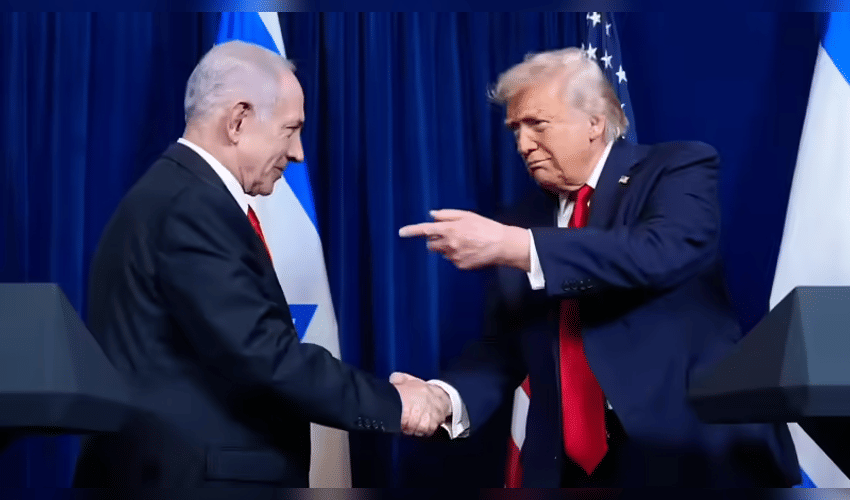

In a development that has sent shockwaves through Washington and Jerusalem, Israeli Prime Minister Benjamin Netanyahu was reportedly blindsided by President Donald Trump's sudden and unexpected move toward a potential deal with Iran. The news came not through a formal diplomatic channel or a private call between the two leaders, but through a social media post on Trump's Truth Social platform that suggested an imminent agreement with Tehran had already been approved by all parties. For Netanyahu, who was deep in a security briefing about Iran at the exact moment Trump made his announcement, the timing and delivery left Israel's leadership scrambling to understand what had actually happened.
The situation illuminated a growing disconnect between the two allies who have been at the forefront of opposing Iran's nuclear program. According to reports from CNN citing an Israeli source, Netanyahu had convened a limited security discussion with top defense officials and some cabinet ministers the night before, just hours after two consecutive nights of U.S. strikes on Iran and Trump's threat of additional attacks. The Israeli leadership was clearly expecting more military pressure, not a diplomatic breakthrough. What they heard instead was Trump declaring that "all parties involved approved" the deal, a statement that appeared to contradict reality on the ground. Israeli officials quickly clarified that no formal agreement had been approved, at least not by Iranian representatives, and that the country was not even a party to the memorandum of understanding Trump was promoting.
The tension between the two leaders wasn't entirely new. Earlier in May 2026, during a heated phone call about Iran's war strategy, Trump and Netanyahu reportedly clashed over whether to pursue negotiations or return to military action. According to Axios, Netanyahu's reaction after that hour-long conversation was described as his "hair was on fire." The Israeli prime minister remained deeply skeptical of negotiations and wanted both Israel and the U.S. to resume military operations against Iran to further weaken Tehran's military and strategic infrastructure. Netanyahu told Trump during that call that delaying planned strikes was a mistake and argued for continuing the military campaign. He viewed Iran's diplomatic maneuvering as mere foot-dragging and was increasingly frustrated by what Israel saw as Tehran's attempts to avoid meaningful concessions.
What makes this moment particularly significant is the strategic implications for Israel's position in the region. Netanyahu had initially praised Trump's decision to decertify the Iran nuclear deal in earlier statements, calling it "brave" and "the right decision for the world." He argued that under the previous agreement, Iran would be guaranteed to have as many as 100 nuclear bombs within a few years. But now, with Trump pursuing what appears to be a new deal that would reopen the Strait of Hormuz for oil tankers and potentially limit some aspects of Iran's nuclear program without fully dismantling it, Netanyahu finds himself in an awkward position. The joint war that began with talk of regime change in Tehran may leave Israel with few strategic gains while the regime remains intact.
The broader picture reveals a complex web of diplomatic maneuvering that Israel wasn't fully aware of until Trump made it public. The revised peace proposal, reportedly drafted by Qatar and Pakistan with support from other regional mediators, aimed to bridge gaps between Washington and Tehran. Trump had earlier informed Netanyahu that the U.S. was likely to move ahead with targeted attacks on Iran under a proposed operation called "Operation Sledgehammer." But instead of continuing military pressure, the president appears to have shifted toward diplomacy, catching Israel off guard and leaving Netanyahu with limited ability to influence the outcome. Israel was aware of progress but didn't fully understand where U.S.-Iran relations were heading, according to Israeli officials.
The fallout from this surprise move has drawn criticism both domestically in Israel and from regional allies. Netanyahu's decision to pause recent hostilities with Iran, prompted by pressure from Trump, has drawn criticism and ridicule from political opponents, as well as some concern from his supporters. The Israeli prime minister's choice to halt plans for a forthcoming assault on Iran shortly after speaking with Trump on Monday has been described by some Israeli commentators as being completely open to decisions of a capricious, hollow, and desperate American president. This criticism reflects a deeper frustration in Israel about the unpredictable nature of American foreign policy and the difficulty of maintaining a consistent strategic partnership with Washington.
From a global perspective, the situation highlights the growing wedge driving Israel and the U.S. apart on Iran policy. The Hill reported on June 9 that growing divisions between the two nations are emerging as Netanyahu defies Trump's demands amid a push for a ceasefire in the war with Iran. The strategic implications are far-reaching, as Israel's security concerns about Iran's nuclear program remain unresolved while the U.S. appears to be prioritizing diplomatic solutions and regional stability over military pressure. This divergence could affect future cooperation on other issues, including defense spending, intelligence sharing, and regional security arrangements.
What happens next remains uncertain. Trump's social media post suggested an imminent agreement, but Iranian signals indicate only a "high chance we will approve the agreement," not a finalized deal. Netanyahu's remarks suggest that contrary to Trump's claims, there is no settled agreement yet on enriched uranium, nuclear facilities, missiles, or Iran's support for regional terror proxies. The Israeli prime minister has stated that Israel is not a party to the U.S.-Iran memorandum of understanding, though he expressed appreciation for Trump's commitment that any final agreement would include removal of enriched material, dismantling of enrichment infrastructure, limits on missile production, and an end to Iran's support for regional terror proxies. The gap between Trump's public claims and the actual status of negotiations remains significant, and the diplomatic path forward is unclear.



