



Asia In News
Nepal Sought China's Early Warning Months Ago, But Alert Came Less Than Five Minutes Before Floods
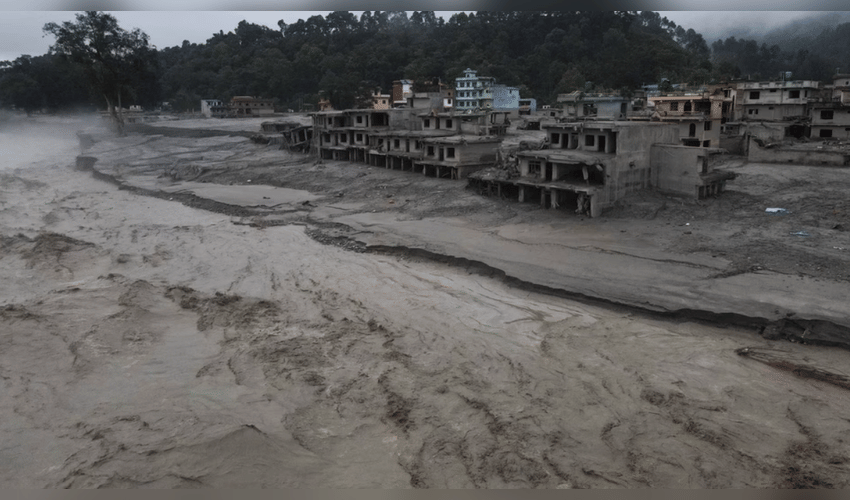

Nepal had sought stronger early-warning information from China months before a devastating flash flood struck the Himalayan region, but officials say the warning available before the disaster came less than five minutes before floodwaters hit, raising fresh questions over cross-border disaster preparedness. The disaster struck on August 26 after a sudden surge of water and debris moved through the mountainous area along the Nepal-China border. The event caused extensive destruction and highlighted the difficulties Nepal faces in monitoring hazards originating in remote areas across the Himalayan frontier.
Nepali officials had already raised concerns about the need for faster and more detailed information from China. During discussions between officials from the two countries, Nepal sought access to information that could help it identify dangerous developments in the high mountains, including changes in glaciers, river levels, avalanches and other hazards capable of triggering sudden floods.
The request became particularly important because Nepal has limited monitoring infrastructure in some of its highest and most remote areas. When a major event occurs upstream, communities downstream can have only a few minutes to respond. In the latest incident, officials said the available warning time in the worst-affected area was less than five minutes.
Such a short window makes evacuation extremely difficult. Residents living near rivers may have little opportunity to move to higher ground, while emergency agencies may struggle to alert communities before roads, bridges and communication networks are damaged by fast-moving floodwaters. Nepal has argued that conventional weather forecasts are not always enough to deal with these kinds of disasters. Heavy rainfall warnings can provide useful preparation time, but sudden glacier collapses, landslides and rapid changes in river conditions can produce dangerous floods without giving communities much time to react.
China, however, has rejected suggestions that it failed to share information. Chinese officials have said that the two countries have been working to improve cross-border disaster communication and that information about weather and potential hazards was shared with Nepal. Beijing has also pointed to the technical challenges involved in monitoring remote and difficult-to-access parts of the Himalayas.
The issue has now drawn attention to the wider need for stronger cooperation between countries sharing the Himalayan river systems. Rivers originating in Tibet flow into Nepal and can quickly affect settlements downstream. Any major change in conditions upstream can therefore become a serious emergency in Nepal within a very short period.
Experts and disaster officials have increasingly emphasized the importance of combining satellite monitoring with high-altitude weather stations, river gauges and real-time communication systems. Faster sharing of data between Nepal and China could allow authorities to issue warnings earlier and give vulnerable communities more time to evacuate.
The latest disaster also comes amid growing concerns about the impact of climate change on the Himalayan environment. Melting glaciers, unstable slopes and changes in high-altitude weather patterns are making it increasingly important for countries in the region to monitor mountain hazards continuously. The tragedy has underscored a difficult reality: an early-warning system is useful only when information reaches people quickly enough for them to act. In a region where floods and landslides can develop within minutes, improving cross-border monitoring and communication could become a crucial part of saving lives during future Himalayan disasters.



