



News
JF-17 Hype After Operation Sindoor Seen as Political Spin, Not Economic Solution
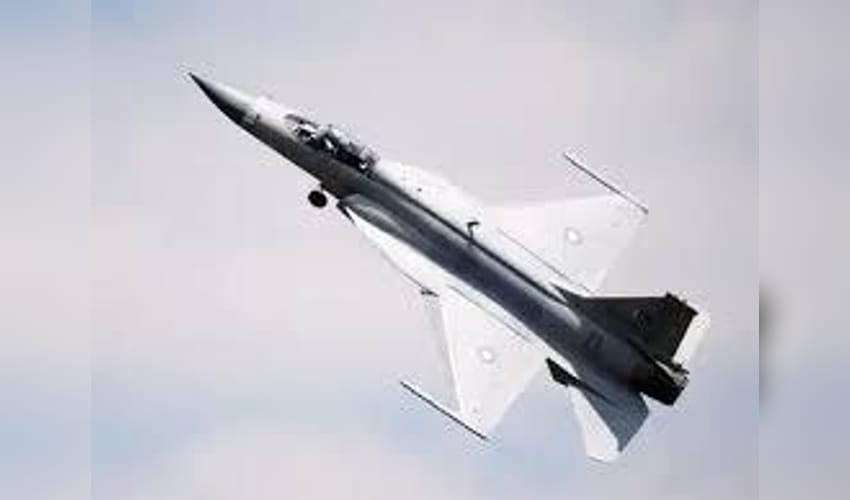

Pakistan has once again made sweeping economic claims, this time asserting that a surge in export interest for its jointly developed JF-17 fighter jet after India’s Operation Sindoor could free the country from its dependence on IMF bailouts within six months. The claim has drawn widespread scepticism from defence analysts and economists, who see it as another attempt to project confidence amid Pakistan’s deepening financial and structural crisis.
Islamabad has sought to link heightened global attention on the JF-17 to recent regional military developments, suggesting that combat-related visibility has boosted the aircraft’s market appeal. However, experts note that visibility does not automatically translate into firm orders, sustained production, or long-term revenue especially in the highly competitive global arms market dominated by established manufacturers from the US, Europe, Russia, and increasingly China.
The JF-17 programme itself has long faced questions over capability, reliability, and export viability. While Pakistan has managed limited sales to a small number of countries, these deals are modest in scale and value. Revenue from such sales, even under optimistic assumptions, falls dramatically short of what would be required to stabilise Pakistan’s economy, service its massive external debt, or replace IMF-backed financing arrangements that run into billions of dollars.
Pakistan’s IMF dependency is rooted in chronic structural problems: low tax collection, dwindling foreign exchange reserves, a narrow export base, mounting energy-sector losses, and persistent political instability. Defence exports particularly a single platform with limited market penetration cannot address these systemic weaknesses. Claims that fighter jet sales could eliminate IMF bailouts in a matter of months overlook the scale of Pakistan’s fiscal imbalance and recurring balance-of-payments crises.
Critics also point out the contradiction in Pakistan’s narrative. On one hand, Islamabad argues that its defence industry is poised for an export-led boom; on the other, it continues to rely heavily on IMF programmes to avoid default. The IMF’s conditional lending, which includes austerity measures and economic reforms, underscores the fragility of Pakistan’s finances something no short-term defence deal can realistically offset.
Moreover, much of the JF-17’s technology and key components are sourced from China, raising questions about how much net foreign exchange Pakistan actually earns from exports after accounting for imports, royalties, and joint production costs. This further weakens the argument that JF-17 sales could generate the kind of surplus needed to fundamentally alter Pakistan’s economic trajectory.
Analysts see the latest claim as part of a familiar pattern: projecting military or strategic developments as economic breakthroughs to mask domestic economic distress. Similar narratives in the past ranging from corridor projects to defence exports have failed to deliver the promised economic turnaround.
As Pakistan continues negotiations with international lenders and struggles to meet IMF conditions, assertions that JF-17 exports could end bailout dependence in six months appear more like political messaging than economic reality. For now, the hard numbers suggest that Pakistan’s path out of IMF reliance will require deep, sustained reforms not optimistic projections built around a single defence platform.
This image is taken from The Economic times.



