



Asia In News
Jamaat-e-Islami Chief Slams Bangladesh President Over Yunus Regime Revelations
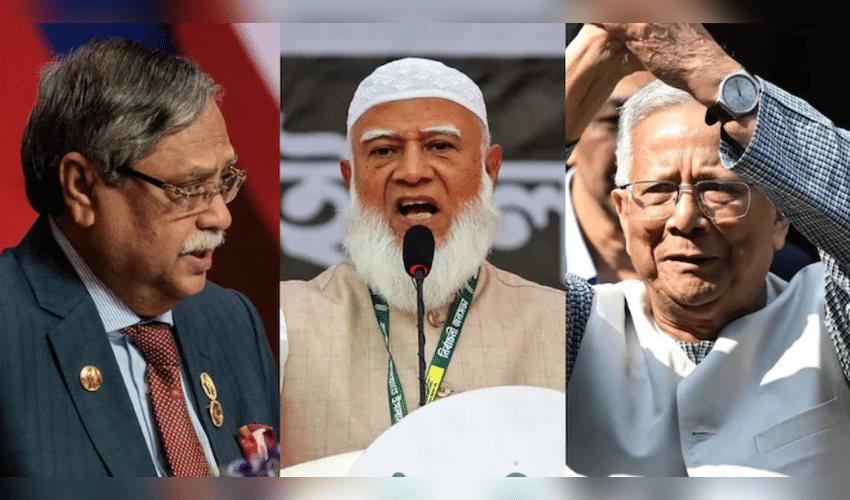

Shafiqur Rahman, the influential leader of Bangladesh's Jamaat-e-Islami, has publicly lashed out at President Mohammed Shahabuddin following explosive allegations about the interim government led by Nobel laureate Muhammad Yunus. The sharp rebuke, posted on social media, accuses the president of contradicting his own statements and breaching his oath by airing sensitive details from the chaotic 2024 political upheaval.
In a recent interview with Kaler Kantho, President Shahabuddin claimed he faced virtual house arrest and repeated pressure from Yunus's administration to step down unconstitutionally after Sheikh Hasina's ouster in August 2024. He described the 18-month Yunus era as marked by plots to destabilize the nation, including efforts to sideline him despite his ceremonial role.
Rahman zeroed in on perceived inconsistencies in Shahabuddin's account of August 5, 2024—the day mass protests forced Hasina to flee. Initially, the president announced he'd received her resignation letter, a claim heard by millions. Yet in a later October 2024 statement, he reversed course, insisting no such letter existed. "Bangladeshis aren't naive," Rahman wrote on Facebook, questioning how the head of state could flip-flop and erode public trust.
The clash reignites scrutiny over Yunus's interim rule, often criticized for alleged ties to Islamist factions like Jamaat amid the power vacuum. As Jamaat's parliamentary opposition leader, Rahman's defense indirectly bolsters narratives of a Yunus-Jamaat alliance, especially with BNP leaders echoing the president's stance on constitutional continuity. This isn't isolated—it's part of Bangladesh's ongoing post-uprising reckoning, where 2024's student-led revolution still casts long shadows. With elections on the horizon and figures like Tarique Rahman rising, such public feuds could signal deepening factional rifts or strategic posturing.
Analysts see this as a litmus test for stability in a nation healing from violence that claimed hundreds of lives. Shahabuddin's revelations challenge Yunus's legacy as a reformer, while Rahman's riposte highlights Jamaat's growing voice despite past bans. No official response from Yunus yet, but the silence amid rising rhetoric keeps Dhaka on edge. Stay tuned as this story develops—Bangladesh's fragile democracy hangs in the balance.



