



News
Hasina Raises Questions Over Democracy and Legitimacy in Bangladesh
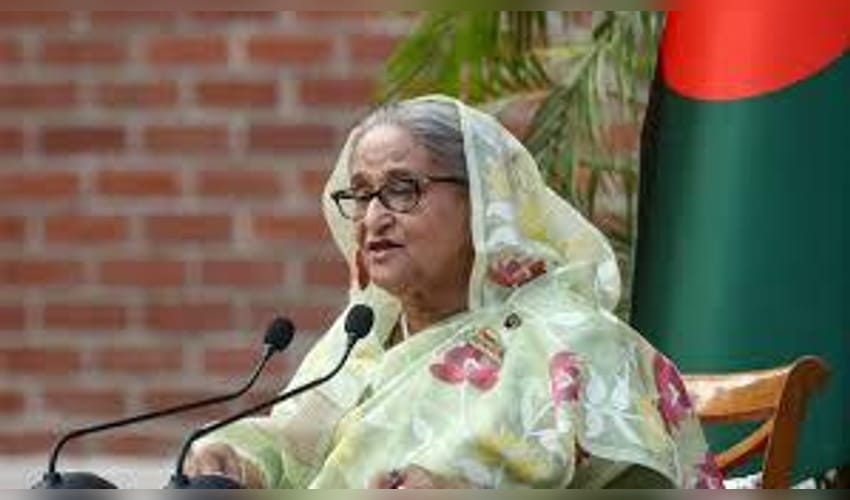

Former Prime Minister Sheikh Hasina has reignited political debate in Bangladesh by openly questioning the legitimacy of the current leadership and the democratic process, throwing fresh uncertainty over the country’s political future as it moves toward a critical electoral phase. Hasina, who was forced out of office following widespread unrest, has challenged the authority of the interim administration, arguing that it lacks a genuine popular mandate. She has expressed serious concerns over the credibility of upcoming elections, particularly in light of restrictions placed on her Awami League and its limited participation in the political process. According to her, sidelining a major political force weakens the foundation of democratic representation.
In recent statements, Hasina acknowledged that mistakes may have been made by security agencies during last year’s protests but insisted those actions were taken in the name of maintaining stability. At the same time, she accused the current leadership of misusing state power and holding on to authority without electoral legitimacy. Her remarks have intensified political polarisation in Bangladesh, where concerns over institutional independence, selective enforcement of law, and shrinking democratic space have already fuelled public unease. Analysts say the controversy reflects broader anxieties about democratic backsliding and the erosion of trust in electoral mechanisms.
The former prime minister has warned that excluding large sections of the electorate associated with her party could severely undermine the credibility of any future vote. She has called for inclusive politics, transparent elections, and the restoration of democratic norms to prevent long-term instability.
As Bangladesh navigates a fragile political transition, Hasina’s challenge has sharpened scrutiny of the country’s democratic credentials. Whether the current leadership can restore confidence in the electoral process remains a central question shaping Bangladesh’s political discourse.



