



News
Hamas Operatives's Presence at Lashkar Camp Exposes Pakistan's Militant Nexus
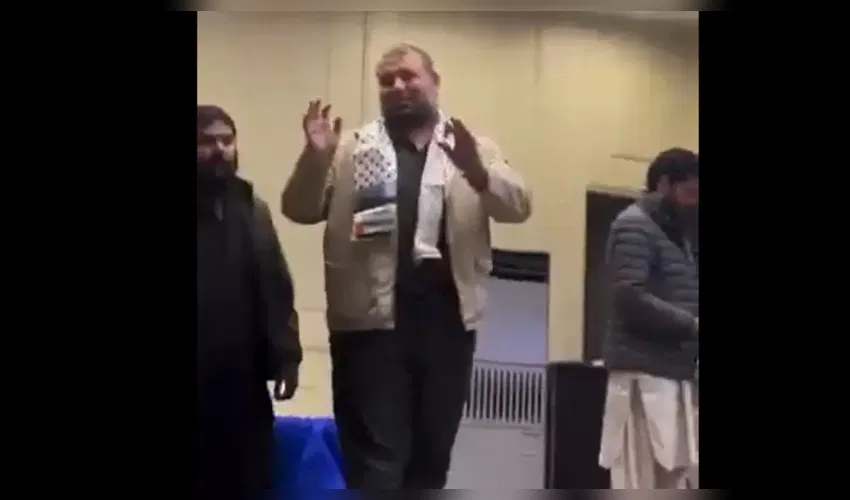

Reports indicating that Hamas-linked terrorist Naji Zaheer attended a Lashkar-e-Taiba terror camp as a chief guest in Pakistan’s Gujranwala have once again brought Islamabad’s long-denied militant ecosystem under sharp international scrutiny. The episode, widely cited in security and intelligence circles, underscores persistent allegations that Pakistan continues to provide space, protection and patronage to multiple jihadist groups despite repeated global warnings.
According to the reports, Zaheer’s presence at a Lashkar facility was neither incidental nor covert. His reported appearance as a chief guest at a training camp points to a level of coordination and ideological convergence between Middle Eastern extremist outfits and Pakistan-based terror groups. Lashkar-e-Taiba, designated as a terrorist organisation by the United Nations and several countries, has long been accused of operating openly in Pakistan under the guise of charities and religious institutions.
Security analysts argue that the alleged interaction highlights Pakistan’s role as a networking hub for transnational jihadist movements. While Islamabad officially claims to have cracked down on terror financing and infrastructure, such incidents suggest a different reality on the ground, where banned organisations continue to function with relative impunity.
The reported Gujranwala camp event also raises questions about Pakistan’s compliance with its international counter-terrorism commitments, particularly to bodies such as the Financial Action Task Force. Critics say that selective action against militant groups—often driven by geopolitical convenience—has allowed Pakistan to maintain a dual policy of public denial and private tolerance.
For India and other regional stakeholders, the alleged presence of a Hamas-linked operative at a Lashkar camp is a serious security concern. It points to the possibility of shared training, tactics and radicalisation strategies, which could further destabilise South Asia and beyond. As global attention increasingly focuses on state-backed or state-tolerated terrorism, such reports deepen Pakistan’s credibility crisis. Without transparent investigations and verifiable action against all extremist networks, Islamabad’s claims of reform are likely to be viewed as cosmetic, reinforcing its image as a safe haven for terror groups operating under different banners but a shared extremist ideology.
This image is taken from IndiaTv.



