



World
Germany Unveils Sweeping Pension, Tax and Labour Reforms to Reignite Economic Growth
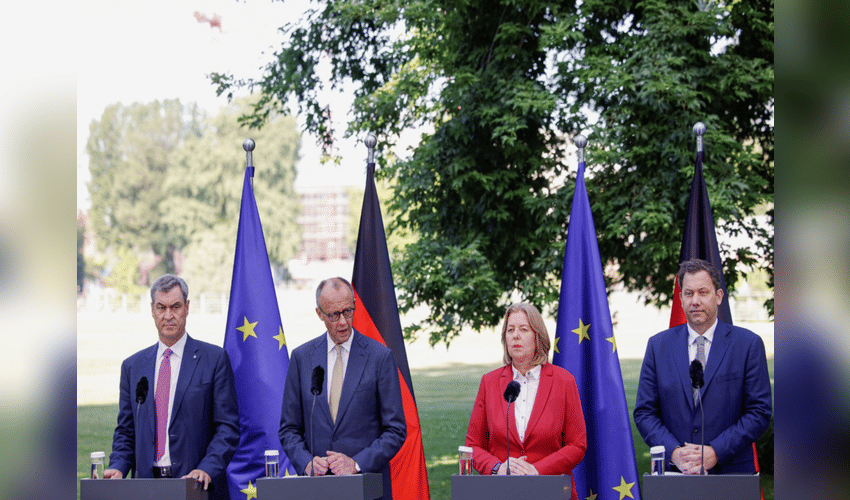

German Chancellor Friedrich Merz has unveiled an extensive reform package aimed at reviving the country's sluggish economy, describing it as a major step toward restoring growth, strengthening businesses, and easing the financial burden on workers. The wide-ranging measures were agreed upon after lengthy negotiations between Merz's conservative CDU/CSU alliance and its coalition partner, the centre-left Social Democratic Party (SPD). The package includes changes to taxation, pensions, labour laws, welfare, housing, and industrial policy, reflecting one of the most ambitious economic overhauls in recent years.
Speaking in Berlin, Merz said the government remains committed to making Germany more competitive by reducing bureaucracy, lowering taxes, and creating conditions that encourage investment and job creation. According to him, the coalition has focused on a single objective since taking office—getting the German economy back on track.
One of the centrepieces of the plan is approximately €10 billion (around $11.4 billion) in annual income tax relief for households. To help finance these tax cuts, the government plans to raise the highest income tax rate from 45% to 47% for the country's wealthiest earners. The coalition has also announced significant changes to workplace regulations. Employees will no longer be able to obtain medical sick notes over the phone and will instead be required to provide a doctor's certificate from the first day they are absent due to illness. Businesses will also receive greater flexibility in offering fixed-term employment contracts and managing the dismissal of higher-paid employees.
Beyond labour reforms, the government intends to modernise Germany's pension system by gradually introducing an investment-based component alongside the traditional pay-as-you-go model. The retirement age is also expected to rise gradually over the coming decades as part of broader pension reforms scheduled to be completed by the end of 2026. Housing and welfare are also key parts of the reform agenda. Officials plan to establish a new federal housing company to support the construction of affordable homes while tightening welfare oversight through expanded data-sharing measures designed to reduce benefit fraud.
To strengthen Germany's industrial competitiveness, the government will prioritise strategic sectors including automotive manufacturing, pharmaceuticals, chemicals, semiconductors, batteries, artificial intelligence, and clean technology. Companies are expected to benefit from reduced reporting requirements and simplified approval processes. Under the new framework, certain business applications could receive automatic approval if authorities fail to respond within four months.
The reforms also include faster expansion of electricity grid infrastructure with clearer timelines for new connections, as well as stronger European Union anti-dumping mechanisms to allow closer scrutiny of strategic investments from non-European countries. Finance Minister Lars Klingbeil expressed confidence that the measures strike a balance between economic growth and social fairness, saying the coalition had reached solutions that would receive broad public support. SPD leader Barbel Bas added that the reforms are designed to stimulate economic expansion, safeguard employment, and maintain social cohesion.
Bavarian Christian Social Union leader Markus Söder acknowledged that reaching the agreement required compromises from all coalition partners but described the final package as balanced and necessary to move Germany beyond its prolonged economic slowdown. Despite strong backing from coalition leaders, the reforms have drawn criticism from several quarters. Major labour unions, including Verdi and IG Metall, argue that tougher sick leave rules and expanded use of fixed-term contracts weaken workers' rights and create unnecessary distrust in the workplace.
Opposition parties, including the Greens and the Left Party, have also criticised the package, claiming it does little to address the rising cost of living. Meanwhile, representatives of Germany's medical community have warned that requiring in-person sick notes from the first day of illness could significantly increase the administrative burden on healthcare providers and lead to longer waiting times for patients.



