



World
From Afghan Jihad to Kashmir:How Pakistan Became a Crucial Hub in South Asia's Terror Network
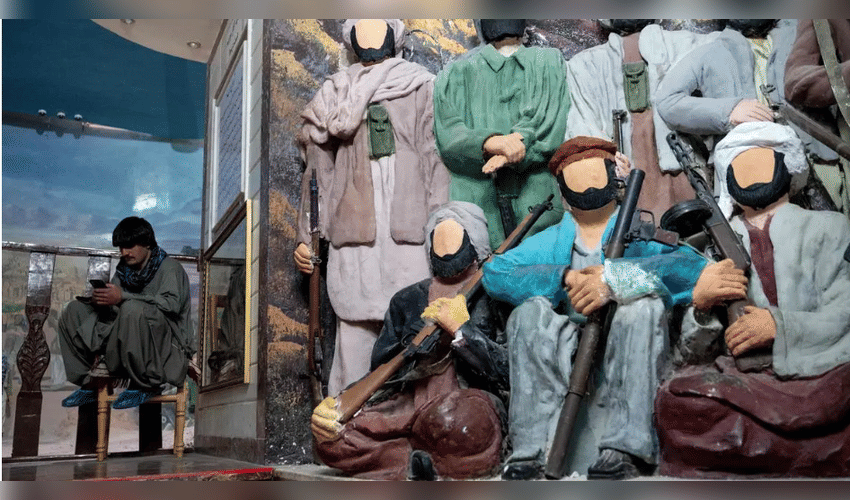

Muridke, a town located barely 30 kilometres from Lahore, became widely known in India after Operation Sindoor in 2025, when the Indian Air Force struck the sprawling Lashkar-e-Taiba infrastructure located there. However, Muridke's emergence as a major centre of extremist activity was not an overnight development. Its roots can be traced back decades to the Afghan jihad of the 1980s and the geopolitical decisions that helped build a vast militant infrastructure across Afghanistan and Pakistan. In her book, Glocal Terror in South Asia: Tracing the Roots in Geopolitics and the Tragedy of Afghanistan, former Indian Police Service officer Anju Gupta examines how the Afghan jihad eventually contributed to the development of terrorist networks that turned their attention towards India, particularly Jammu and Kashmir.
The Afghan Jihad and the Creation of a Militant Infrastructure
The Soviet invasion of Afghanistan in December 1979 triggered one of the largest covert geopolitical operations of the Cold War. The United States moved to support Afghan resistance groups fighting Soviet forces, with Pakistan becoming the principal channel for money, weapons and training. The CIA worked closely with Pakistan's Inter-Services Intelligence, which played a central role in coordinating assistance to Afghan fighters. Saudi Arabia also became a major financial supporter of the jihad, contributing enormous resources to the anti-Soviet campaign.
Weapons sourced from different countries, including China, were transported through Pakistan. While American personnel largely avoided directly training Afghan fighters, Pakistani instructors operated training camps and prepared thousands of militants for combat. Pakistan also played an important role in recruiting fighters from Afghan refugee populations. According to Gupta's account, this massive international operation created an extensive military and ideological infrastructure that would survive long after the Soviet withdrawal.
From a Regional Conflict to Global Jihad
As the Afghan war intensified, foreign fighters particularly from Arab countries began arriving in Pakistan and Afghanistan. Their participation was driven increasingly by ideological appeals portraying the conflict as a religious obligation. Religious decrees and extremist propaganda helped transform the Afghan conflict from a national resistance movement into a wider transnational jihad.
The fighters who came to be known as the Arab Afghans developed networks and battlefield experience that later contributed to the rise of global terrorist organisations, including Al-Qaeda. Afghanistan became a training ground for militants from different parts of the world. When Soviet forces eventually withdrew, thousands of experienced and radicalised fighters remained connected through networks created during the war. Rather than disappearing, this infrastructure found new conflicts and new targets.
Kashmir Emerges as a New Theatre
One of the central arguments of Gupta's book is that Kashmir became an important destination for militant networks that had developed during the Afghan jihad. During the late 1980s, Pakistan increasingly linked the conflicts in Afghanistan and Kashmir. As the Soviet withdrawal approached, militant groups and foreign fighters who had gained experience in Afghanistan needed new areas of operation.
Pakistan established and expanded training facilities that became centres for radicalised fighters. According to the book, these networks helped produce or support prominent extremist figures, including Hafiz Saeed and Masood Azhar. By the early 1990s, hundreds of fighters associated with the Afghan jihad had been trained and redirected towards conflicts in Kashmir and other parts of the world. The book argues that Pakistan attempted to turn Kashmir into another front of international jihad by drawing upon the ideology, personnel and infrastructure created during the Afghan conflict.
Pakistan's Strategy and the Rise of Extremist Groups
Gupta describes how Pakistan's intelligence establishment redirected experienced fighters from the Afghan war towards Jammu and Kashmir. The strategy, according to the book, served multiple purposes: maintaining pressure on India while also providing radicalised militants with new areas of operation.
However, attempts to replicate the Afghan model in Kashmir faced significant obstacles. Kashmir's distinct cultural and religious traditions did not easily fit the rigid ideological framework promoted by foreign jihadist organisations.
Many foreign fighters subsequently shifted towards conflicts in Bosnia, Chechnya and Central Asia. Pakistan, however, continued supporting militant groups operating against India. The networks that developed during this period eventually produced some of South Asia's most notorious extremist organisations and leaders. Hafiz Saeed later became internationally associated with Lashkar-e-Taiba and the 2008 Mumbai attacks, while Masood Azhar emerged as the founder of Jaish-e-Mohammed and was eventually designated a global terrorist by the United Nations in 2019.
A Crucial India-Focused Examination
While several prominent books have examined the CIA's involvement in Afghanistan, Pakistan's role in the anti-Soviet jihad, and the emergence of the Taliban and Al-Qaeda, Gupta's work focuses specifically on how these developments affected India. This is where Glocal Terror in South Asia makes its strongest contribution. It connects the geopolitical decisions of the Cold War with the later emergence of cross-border terrorism directed towards India. The book relies heavily on documented accounts and secondary sources to build this narrative. Although Gupta's long career in the Indian Police Service could have provided more first-hand insight, the book nevertheless offers a detailed and structured examination of the issue.
A Reminder of the Consequences of Geopolitical Choices
The story of Muridke and Pakistan's wider militant infrastructure cannot be understood without examining the legacy of the Afghan jihad. The networks, training systems, weapons pipelines and ideological movements created during the Cold War did not disappear when the Soviet Union withdrew from Afghanistan.
Instead, many of them evolved and found new battlegrounds. For India, the consequences were particularly significant as Pakistan-based terrorist organisations increasingly turned Kashmir and other parts of the country into targets.



