



News
Forgive All, It's Time: family's Heartbreaking Goodbye to Harish Rana Before Letting Go
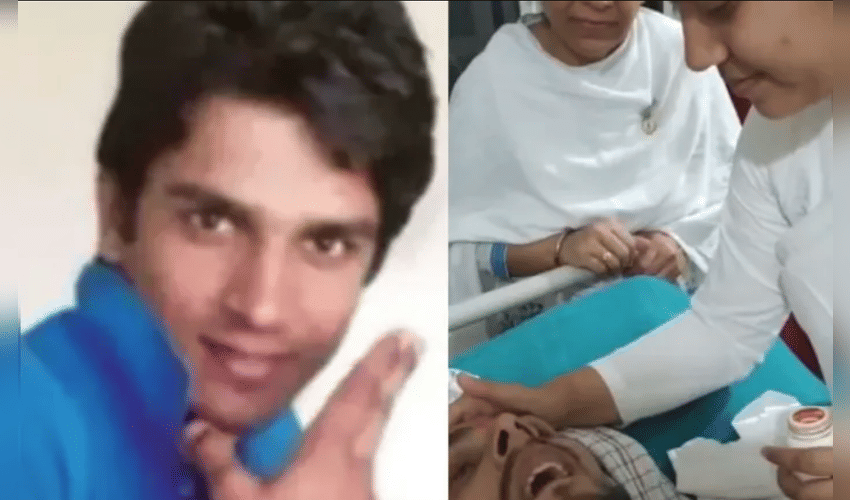

In a deeply moving scene that's captured hearts across India, the family of Harish Rana bid an emotional farewell to their loved one moments before his transfer to AIIMS Delhi for the withdrawal of life support. The 32-year-old, who has been in a vegetative state for 13 years following a tragic 2013 accident, received the Supreme Court's historic nod for passive euthanasia last week.
Harish, a former Panjab University student, suffered irreversible brain damage after falling from the fourth floor of a building. Since then, his devoted family—deeply involved with the Brahma Kumaris spiritual organization—cared for him at home, managing his tracheostomy and feeding tubes despite bleak medical prognosis after prognosis.
A heartbreaking 22-second video, now viral on social media, shows the intimate bedside moment. A Brahma Kumaris sister tenderly applies tilak to Harish's forehead, strokes his head, and whispers words of release: "Forgive everyone, ask for forgiveness from all... it's time to go now, okay?" His mother sits nearby, overcome with grief, as subtle twitches—blinking eyes and faint gulps—add to the raw emotion, even in his unresponsive condition.
The Supreme Court's ruling marks India's first approved case of passive euthanasia, affirming Harish's "right to die with dignity." Justices reflected on profound questions of life and suffering, invoking Shakespeare's Hamlet: "To be or not to be." This decision ends years of limbo for the family, who fought legally after hospitals refused to continue futile care.
The case has reignited national conversations on end-of-life choices in India, where passive euthanasia was legalized in 2018 but remains rare. Experts note it could set precedents for thousands in persistent vegetative states, balancing hope, ethics, and compassion. As Harish's journey concludes, his story reminds us of the quiet strength in letting go.



