



World
Eugene Horsch Case: Four Missing Women Linked to Philadelphia Olney Home as Gary Heidnik Comparisons Resurface
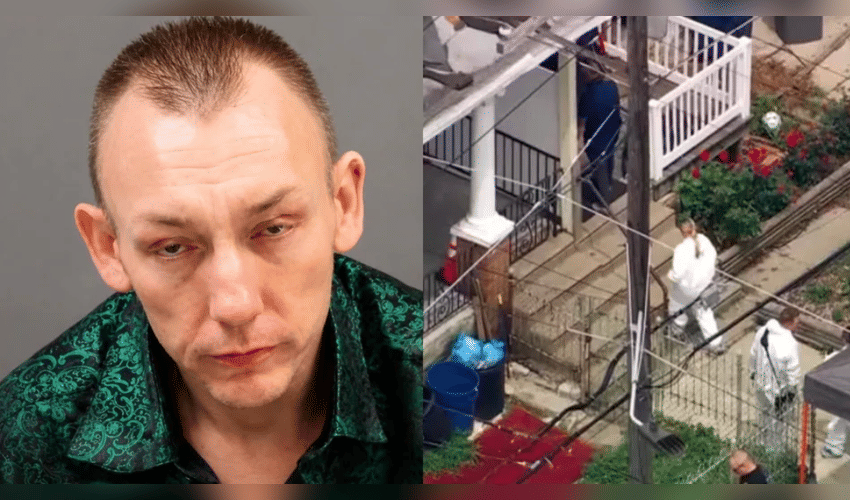

A disturbing investigation surrounding a home in Philadelphia's Olney neighborhood has drawn renewed attention after authorities linked the property to evidence involving four women who have been reported missing over the years. The case has also revived memories of convicted Philadelphia killer Gary Heidnik, although investigators have not publicly accused Eugene Horsch of being a serial killer.
The house, located on West Chew Avenue, became a major focus of the investigation after Horsch, 44, was arrested in June on federal weapons and fraudulent identification charges. A subsequent search of the property uncovered firearms, drugs, chemicals, identification documents and a large volume of digital material that investigators are now examining.
The investigation has expanded considerably since the initial search. Authorities have said digital evidence recovered from the home appears to show two missing Philadelphia women, Maribel Fresses and Gabrielle Amarando, alive and later deceased. Their remains have not been found, leaving investigators with the difficult task of determining exactly what happened and whether the evidence can be independently verified.
Fresses disappeared in 2018, while Amarando was last seen in 2012. According to investigators, the discovery of the material was significant enough for authorities to notify the women's families. Police have stressed that the investigation is continuing and that the recovery of digital evidence does not, by itself, answer every question surrounding their disappearances.
The volume of material seized from the property has added another layer of complexity. Investigators reportedly recovered hundreds of thousands of images, tens of thousands of videos and thousands of pages of writings, drawings and other documents. Detectives are working through the material to determine whether it contains additional information about missing people or possible crimes.
The names of two other women have also become part of the investigation. Blair Tonzelli, who was reported missing in 2023, came under scrutiny after a woman found with Horsch during his June arrest was reportedly carrying identification in Tonzelli's name. Investigators later found additional documents associated with Tonzelli at the Olney property. Another case involves Amy McHale, who disappeared in 2016. McHale had connections to Raymond Charles "R.C." Horsch, Eugene Horsch's late father, and her family has previously said that the West Chew Avenue property was among the locations associated with her disappearance.
Those connections have prompted investigators to examine whether the four cases are related. At this stage, however, authorities have not publicly established that all four disappearances stem from the same crime or that Horsch was responsible for any of them. The investigation began with Horsch's June arrest. Authorities said officers stopped him near Independence Hall and discovered firearms with obliterated serial numbers, drugs and other items. A woman accompanying him was reportedly using identification belonging to Tonzelli.
That discovery led investigators to the Olney property, where searches uncovered a collection of unusual and potentially significant items. Authorities also examined a large drum, chemical containers, hidden areas and plumbing beneath the property as they looked for evidence that could help explain the disappearances. At one point, investigators examined a substance inside the house that initially raised concerns because it appeared to be blood. Subsequent testing reportedly determined that it was not blood. Searches of the property also failed to produce the remains of the missing women.
The circumstances have nevertheless generated comparisons with Gary Heidnik, whose crimes shocked Philadelphia in the 1980s. Heidnik kidnapped women and imprisoned them in the basement of his North Philadelphia home before being convicted of two murders. The comparison is based largely on the disturbing combination of a Philadelphia residence, multiple missing women and evidence discovered during a police investigation. However, the cases are legally and factually different. Heidnik was ultimately convicted of murder, while Horsch has not been charged with murder in connection with the women currently being investigated.
Horsch's existing federal case concerns weapons and alleged fraudulent federal credentials. The investigation into the missing women is a separate and continuing matter. For investigators, one of the biggest challenges is now sorting through the enormous quantity of digital evidence recovered from the house. Establishing when files were created, who produced them and whether the material can be supported by physical or forensic evidence will be critical to determining what happened.
The absence of recovered remains also leaves major questions unanswered. Authorities must determine whether the women are deceased, locate any possible remains and establish whether there is evidence connecting their disappearances to the Olney property. The investigation remains active, and officials have not publicly declared Eugene Horsch a serial killer. The disturbing evidence uncovered at the house has raised serious questions, but investigators still have to establish the facts through forensic examination and further investigation. As police and federal authorities continue reviewing the material, the case is likely to remain under intense scrutiny. Whether the investigation ultimately reveals a connection among the four missing women—or leads investigators in a different direction—will depend on what the remaining evidence shows.
Disclaimer: This image is taken from



