



Economy
Economic Security, AI and Critical Minerals: What's Driving Japan PM's India Visit?
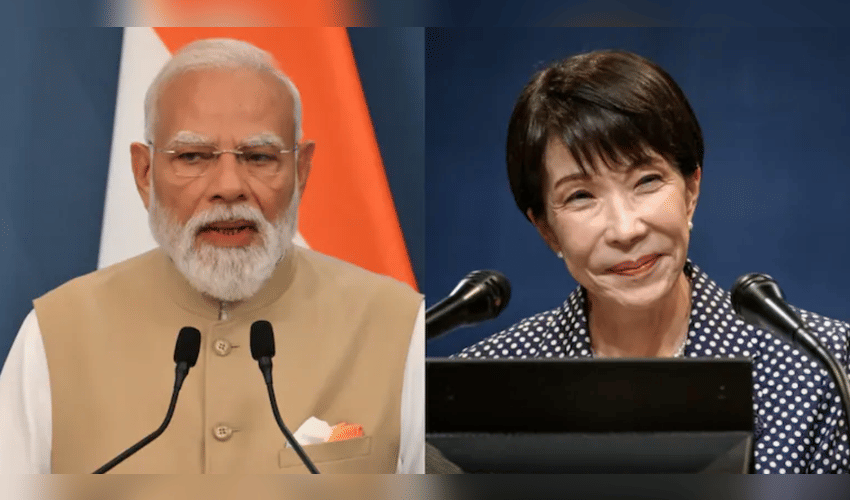

Japanese Prime Minister Sanae Takaichi arrived in India on Thursday for the 16th India-Japan Annual Summit, where discussions with Prime Minister Narendra Modi are expected to focus on strengthening cooperation in economic security, artificial intelligence (AI), semiconductor manufacturing, clean energy and critical minerals. According to officials, the two countries are likely to unveil a Joint Declaration on Economic Security Cooperation, underscoring their shared commitment to building resilient supply chains and expanding collaboration in strategic technologies. A separate joint statement on artificial intelligence is also expected, highlighting the growing importance of AI in the bilateral partnership.
The summit comes at a time when both India and Japan are seeking to reduce dependence on vulnerable global supply chains while expanding cooperation in emerging technologies. Artificial intelligence, semiconductors and critical minerals have become central to both countries' economic and national security strategies.
Officials familiar with the agenda said discussions are expected to cover joint research in AI, technology partnerships, semiconductor manufacturing, and initiatives aimed at improving supply chain resilience. The leaders are also likely to review progress on ongoing infrastructure and investment projects while exploring new areas of industrial cooperation.
Energy security is another key priority during the visit. India and Japan are expected to sign an agreement on liquefied natural gas (LNG) supply security, reflecting efforts by both nations to strengthen energy resilience amid continuing geopolitical uncertainties and global market disruptions. Critical minerals—including lithium, cobalt, nickel and rare earth elements—are also expected to feature prominently in the talks. These resources are essential for electric vehicles, batteries, renewable energy technologies and advanced electronics, making secure access increasingly important for both economies.
Beyond technology and trade, the two leaders are expected to exchange views on regional and global developments, including cooperation in the Indo-Pacific, maritime security and broader strategic ties. India and Japan have steadily expanded their partnership in recent years through defence cooperation, infrastructure development and investment initiatives.
The summit is also expected to provide fresh momentum to business ties. Nearly 120 business-to-business memoranda of understanding (MoUs) are likely to be signed alongside government-level agreements, covering sectors ranging from advanced manufacturing and digital technology to clean energy and logistics. Analysts say the visit reflects the evolving nature of the India-Japan relationship, which is increasingly centred on trusted technology partnerships, resilient supply chains and economic security. With geopolitical uncertainties reshaping global trade and investment, both countries are looking to position themselves as reliable partners in the Indo-Pacific while accelerating cooperation in next-generation industries.



