



Politics
Did Trinamool Congress Collapse Because It Never Had a Clear Ideology.
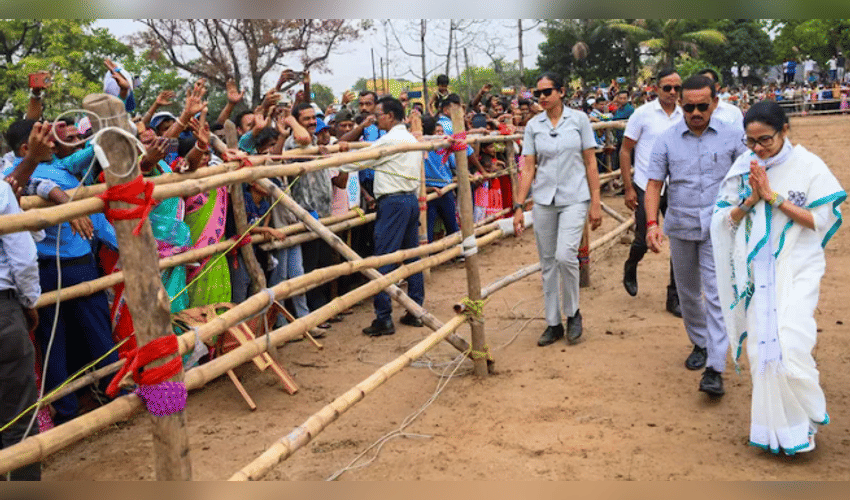

West Bengal's political landscape has been shaken by the dramatic implosion of Mamata Banerjee's Trinamool Congress, but this isn't just about bad election results. The real story goes much deeper—into the party's very foundation. When political scientists examine what happened, they point to a fundamental problem: the TMC was never built on a solid ideological foundation. It was created in 1998 as a Congress breakaway with one single mission—oust the Communist Party of Left from West Bengal—and nothing more.
Think about what that means. The TMC became a "big tent" where anyone who wanted to defeat the Left could join, regardless of their political beliefs. Ideology was deliberately set aside to build a broad coalition. Political scientist Subhamoy Maitra explains that this compromising approach destroyed internal cohesion over the party's 15 years in power. When you're together only for what you oppose rather than what you believe in, the bonds are fragile. Once power was lost, the house of cards collapsed with terrifying speed.
The recent crisis makes this painfully clear. At least 18 heavyweight leaders—sitting and former MPs, MLAs, and ministers—have publicly broken ranks to criticize the party's functioning. CPI General Secretary D Raja questioned the TMC's ideological foundation directly: "What are the ideological foundations of her party? What are its political positions? Only the TMC can explain this". How do you explain MPs migrating to other parties so casually? When leaders have no ideological anchor, they're free to swim wherever the political winds blow.
This isn't just theoretical—it mirrors what happened to the communist movement the TMC replaced in 2011. Unlike that movement, which had decades of ideological building and cadre development, the TMC never built anything substantial beyond Mamata Banerjee's charismatic leadership and patronage networks. The Indian Express put it bluntly: patronage machines, when stripped of power, have nothing left to hold them together. The party was structurally incapable of surviving the loss of power because it was always transactional, nepotistic, and ideologically hollow.
The TMC's crisis reveals something bigger about Indian politics today. Regional exceptionalism resonates less with a generation consuming social media, competing in national exams, and aspiring to national opportunities. A party without ideology, without cadre, without a second tier of leadership, and without a coherent answer to why it should exist as a distinct formation was always one electoral defeat away from implosion. What's collapsing isn't merely a party—it's a model of politics that was fundamentally transactional and ideologically empty, and Bengal's people have decisively rejected it.
Disclaimer: This image is taken from Insta/@sakpataudi.



