



News
Delhi's Tangled Future: How Poor Urban Planning Is Turning Neighbourhoods Into Safety Risks
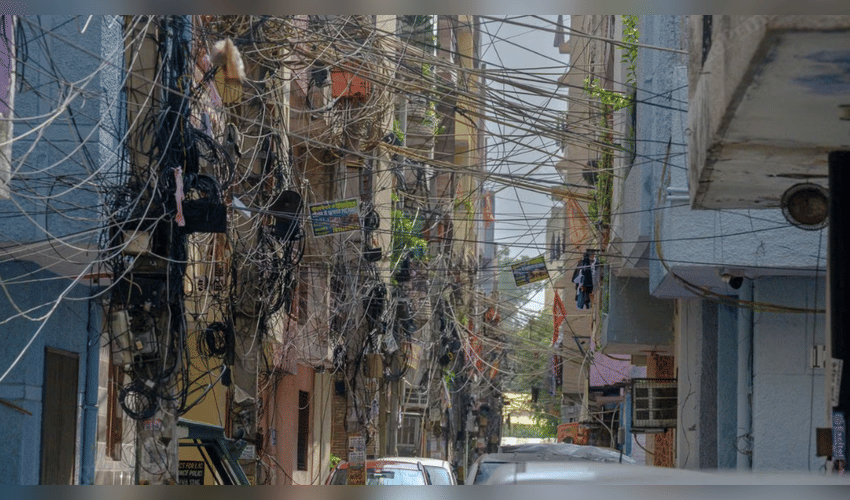

Delhi’s rapidly growing urban villages and densely packed residential pockets are once again under scrutiny as concerns over unsafe infrastructure, narrow lanes, and hanging electrical wires continue to grow across several parts of the capital. Areas such as Katwaria Sarai, Hauz Rani, Munirka, Saidulajab, and parts of Old Delhi have become symbols of the city’s unplanned expansion, where overcrowding and poor civic infrastructure have created serious safety concerns for residents.
In many of these neighbourhoods, buildings stand extremely close to each other while a dense network of electric, internet, and cable wires hangs overhead. Residents say the situation has worsened over the years as population density increased without corresponding improvements in infrastructure. Urban experts believe the issue reflects a larger failure in Delhi’s long-term planning model.
“Most of these localities were never designed to accommodate the number of people currently living there,” said an urban development researcher based in Delhi. “The infrastructure is under pressure because the city expanded faster than planning systems could respond.” The problem is particularly visible in urban villages located near universities, business districts, and metro corridors. Affordable rents and easy connectivity have attracted students, working professionals, and migrant workers, leading to rapid construction activity in areas originally meant for low-density residential use.
As buildings multiplied, roads became narrower, parking spaces disappeared, and electrical systems grew more chaotic. In several areas, overhead wires now form tangled clusters stretching across lanes and rooftops, raising concerns about fire hazards and electrocution risks. Residents say power outages and short circuits are common during the summer and monsoon seasons when electricity demand peaks and waterlogging increases.
“The wiring looks dangerous, especially during rains,” said a resident of Hauz Rani. “People are worried because one spark can create a major accident.” The narrow roads have also become a major challenge for emergency response teams. Fire tenders and ambulances often struggle to enter congested lanes during emergencies, delaying rescue operations.
Recent incidents involving fires and building collapses in parts of Delhi have once again highlighted the risks associated with overcrowded and poorly regulated neighbourhoods. According to urban planners, Delhi’s affordable housing shortage is one of the key reasons behind the unchecked growth of these areas. With planned housing becoming increasingly expensive, many residents are left with little option but to move into informal rental accommodations in urban villages.
Experts argue that authorities focused heavily on planned colonies and ownership-based housing while ignoring the rising demand for affordable rental spaces. “This is not just a local problem anymore,” said a Delhi-based architect. “It is a warning sign for rapidly growing Indian cities where infrastructure development is failing to keep pace with population growth.”
Calls for underground cabling, stricter building safety enforcement, redevelopment projects, and improved civic planning have grown louder in recent years. Many residents believe progress on the ground remains slow. As Delhi continues to expand, the condition of these overcrowded neighbourhoods is becoming a critical urban challenge — one that directly affects public safety, quality of life, and the city’s future growth.
Disclaimer: This image is taken from



