



Politics
Court Denies Relief to Congress Leader Meenakshi Natarajan in Nomination Rejection Case
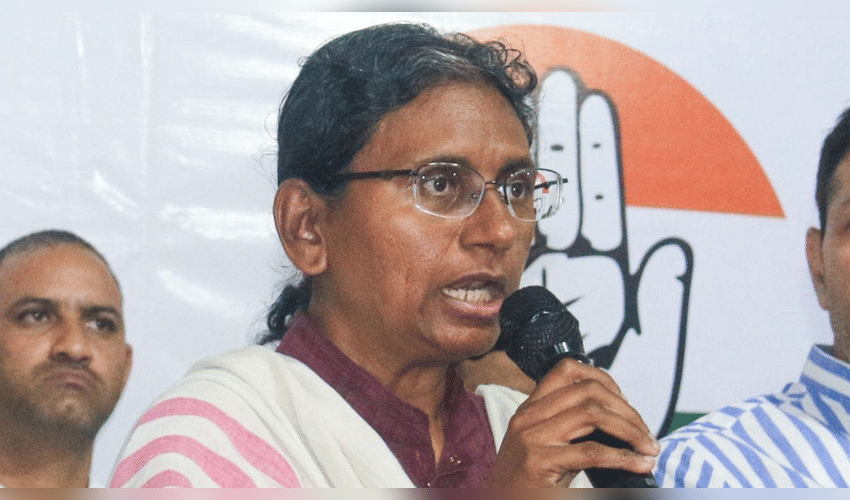

The Supreme Court has delivered a significant setback to Congress leader Meenakshi Natarajan, refusing to provide any immediate relief after her Rajya Sabha nomination papers were rejected in Madhya Pradesh. The top court dismissed her writ petition on Friday, citing constitutional restrictions under Article 329 that prevent judicial interference in ongoing election processes. This decision leaves Natarajan without a legal pathway to contest the election at this stage, though the court clarified she can still challenge the rejection through an election petition filed at the appropriate High Court after the polls conclude.
The nomination rejection stems from a technical dispute over disclosure requirements. Natarajan's papers were cancelled by the Returning Officer after BJP candidate Mahesh Kewat objected that she failed to disclose details of a pending case in Telangana. The Congress party has strongly defended Natarajan, arguing that only a notice was issued in the Telangana case—not a formal criminal case—and that no court had taken cognizance or filed a chargesheet. Senior advocate A M Singhvi, representing Natarajan, emphasized that election rules don't require disclosure at this preliminary stage. However, BJP representatives countered that Supreme Court guidelines mandate disclosure once court proceedings reach the notice stage, creating a legal interpretation clash that ultimately went against the Congress candidate.
This rejection has dramatically shifted the political calculations for Madhya Pradesh's three Rajya Sabha seats. With the BJP commanding a strong majority in the 230-member Assembly, the party was already positioned to secure two seats. Natarajan's removal has now strengthened BJP's position for the third seat as well, weakening Congress's previously adequate numbers to claim one seat. The Congress party has accused the BJP of orchestrating what they call a "constitutional conspiracy" to exclude legitimate candidates, while BJP representatives maintain that election authorities simply followed legal disclosure requirements. The stakes are particularly high because Rajya Sabha seats determine long-term parliamentary influence and party positioning at the national level.
The Supreme Court's decision sends a clear message about judicial boundaries in election matters. Justices Prashant Kumar Mishra and A S Chandurkar declined to exercise writ jurisdiction, emphasizing that courts cannot carve out exceptions to intervene in some election cases while requiring others to pursue remedies through post-election petitions. The court gave Natarajan liberty to raise the issue in an election petition under the Representation of the People Act, but this comes after the election results are declared. For Congress, this represents a frustrating legal and political defeat that forces the party to appeal to the Election Commission for intervention while preparing for what could be a protracted legal battle after the polls.
This case highlights growing tensions around election disclosure requirements and what constitutes a "criminal case" needing documentation. The controversy centers on whether receiving a court notice equals having a criminal case pending, or whether formal cognizance and chargesheet filing are necessary thresholds. As political parties face increasingly complex disclosure obligations, this dispute could influence how future candidates approach nomination paperwork. The Election Commission now faces pressure to intervene, with Congress urging the commission to overturn the Returning Officer's decision as "legally perverse" and threatening principles of free and fair elections by excluding a candidate before the electoral process begins.