



Technology
Chris Olah said at the Vatican that AI development needs ethical oversight beyond tech companies alone.
Published On Tue, 26 May 2026
Nikhil Banerjee
53 Views
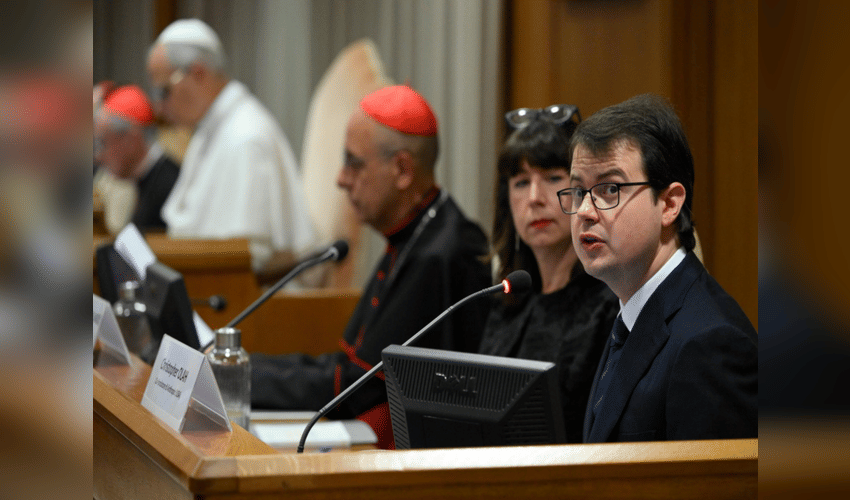

Chris Olah has urged the world to expand oversight of artificial intelligence beyond the technology industry, arguing that AI is no longer just a technical issue but one deeply tied to ethics, governance, philosophy, and human values. Speaking at the Vatican during the unveiling of Pope Leo XIV’s first AI-focused encyclical, Magnifica Humanitas: On Safeguarding the Human Person in the Time of Artificial Intelligence, Olah said decisions about AI should not be left entirely to tech companies or researchers.
According to him, the impact of AI is too significant to be handled only within the AI community. He stressed that religious thinkers, philosophers, policymakers, and society as a whole must take part in shaping how the technology evolves. Olah also explained that modern AI systems differ greatly from traditional machines or engineered structures. Unlike airplanes or bridges, which are carefully designed piece by piece, AI models are “grown” using vast amounts of human language and knowledge while being loosely inspired by the human brain.
The Anthropic co-founder noted that researchers are discovering increasingly complex and sometimes unsettling patterns within advanced AI systems. He said scientists have observed behaviours that resemble findings from human neuroscience, including signs of introspection. He further revealed that some AI systems appear to display internal patterns similar to emotional states such as fear, satisfaction, grief, and unease. However, he cautioned that researchers still do not fully understand the meaning or implications of these observations.
Another major concern raised by Olah was the economic disruption AI could cause in the future. He warned that large-scale automation may significantly replace human jobs, potentially creating one of the biggest social and moral challenges of the coming decades. Calling for wider accountability, Olah said governments, academics, civil society organisations, and religious institutions should all play a stronger role in AI governance. He emphasized the need for independent critics and ethical voices capable of challenging powerful technology companies when necessary.
The Vatican’s new encyclical has become one of the Catholic Church’s strongest statements yet on artificial intelligence, addressing issues such as job displacement, concentration of technological power, and risks linked to autonomous systems. The event itself highlighted an unusual but significant collaboration between the tech sector and religious leadership, reflecting growing international concern about how rapidly advancing AI technologies could reshape society. Olah concluded by saying that the future of AI must remain focused on humanity and future generations, stressing that technological progress should ultimately serve the common good.
Disclaimer: This image is taken from @VaticanNews.



