



Asia In News
Bangalore Water Supply Test Leaves 9-Judge Bench in an Awkward Position
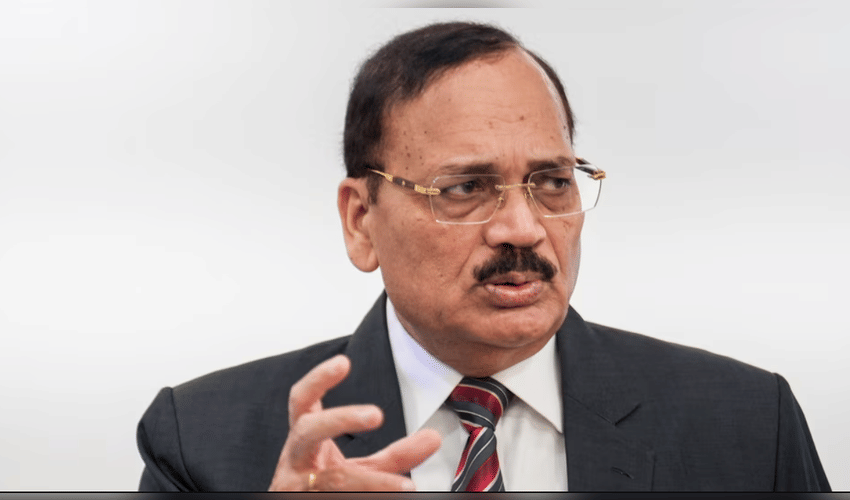

The Supreme Court’s nine-judge Constitution Bench has delivered a complicated verdict on the decades-old Bangalore Water Supply case, leaving an unusual split over the test used to determine what qualifies as an “industry” under Indian labour law. The bench was examining the landmark 1978 judgment in Bangalore Water Supply and Sewerage Board v. A. Rajappa, which established a broad three-part test for deciding whether an establishment or activity falls within the definition of an industry under the Industrial Disputes Act, 1947.
The latest proceedings were expected to settle the legal uncertainty surrounding that test. Instead, the detailed opinions have produced a situation in which four judges supported a new formulation, four judges rejected it, while Justice P.S. Narasimha took a separate view. Chief Justice of India Surya Kant, along with Justices Satish Chandra Sharma, Alok Aradhe and Vipul M. Pancholi, supported a revised approach to determining whether an activity constitutes an industry. Their formulation places greater emphasis on the nature and character of the activity and its economic or commercial features.
Four other members of the bench — Justices B.V. Nagarathna, Dipankar Datta, Ujjal Bhuyan and Joymalya Bagchi — did not agree with the proposed reformulation and continued to support the legal position established by the earlier Bangalore Water Supply judgment. Justice P.S. Narasimha adopted a different approach. He held that the reference itself did not require the Supreme Court to formulate a fresh test, particularly because the Industrial Disputes Act has since been repealed and replaced by the Industrial Relations Code, 2020.
This has resulted in an unusual four-four-one position on the central legal question. The Bangalore Water Supply judgment has remained one of the most influential decisions in Indian labour jurisprudence. Its so-called triple test broadly examined whether there was systematic activity, cooperation between employers and employees, and the production or provision of goods or services to satisfy human needs.
Because of its wide interpretation, the 1978 ruling had implications for a range of organisations and activities extending beyond conventional manufacturing units. Questions involving hospitals, educational institutions, charitable organisations and other service establishments have repeatedly required courts to examine the scope of the judgment.
The latest Supreme Court ruling, however, does not simply erase the old precedent. For disputes arising under the repealed Industrial Disputes Act, the Bangalore Water Supply framework continues to have relevance, particularly in matters that were already pending. The situation is different under the Industrial Relations Code, 2020. Since the new legislation has replaced the earlier law, courts will have to examine its provisions independently when deciding what constitutes an “industry” under the current legal framework.
The unusual outcome of the nine-judge bench therefore leaves Indian labour law in an interesting position. While the court has provided clarity for disputes governed by the old legislation, the absence of a clear majority supporting the proposed new test could lead to further legal debate over its precedential value. The judgment is likely to attract considerable attention from employers, workers, trade unions and labour-law practitioners as courts begin dealing with disputes under the new industrial relations regime. The long-running debate that began with the Bangalore Water Supply judgment nearly five decades ago may therefore continue in a new legal form.



