



News
6 Lanes, 600 km, 6 Hours: Ganga Expressway Enables Travel at Speeds Up to 120 kmph
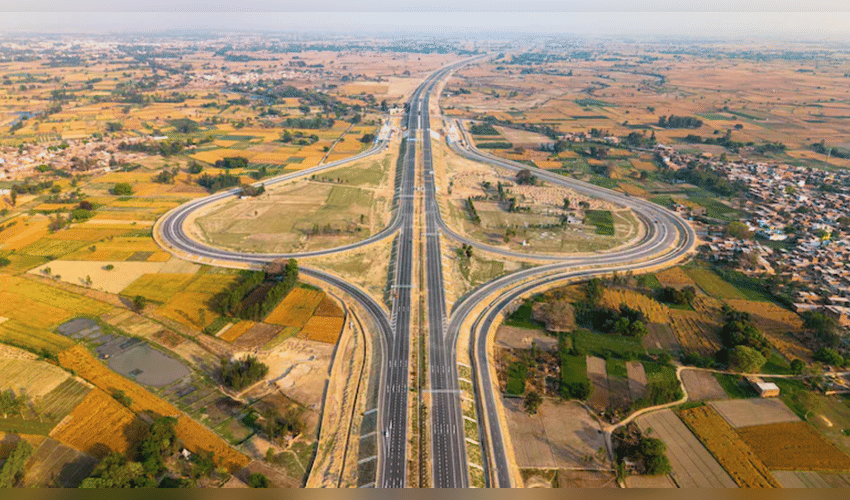

Prime Minister Narendra Modi on Wednesday inaugurated the 594-km-long Ganga Expressway, marking a significant milestone in Uttar Pradesh’s infrastructure journey. Chief Minister Yogi Adityanath was also present at the event, highlighting the importance of the project for the state’s development plans.
Built at an estimated cost of around ₹36,230 crore, the Ganga Expressway is now the longest expressway in Uttar Pradesh and one of the largest greenfield road projects in the country. The six-lane access-controlled highway, which can be expanded to eight lanes in the future, connects Meerut in western Uttar Pradesh to Prayagraj in the east, passing through 12 districts. More than just a high-speed road, the project is being positioned as a development corridor aimed at driving industrial, logistical, and economic growth.
The timing of the launch is significant, as Uttar Pradesh is increasingly focusing on infrastructure-led development. The expressway is expected to cut travel time between Meerut and Prayagraj from around 10–12 hours to nearly 6–8 hours, making long-distance travel faster and more efficient. However, the larger vision extends beyond connectivity. The state government has planned multiple industrial and logistics clusters along the route, covering thousands of acres of land. Officials indicate that hundreds of investment proposals worth nearly ₹47,000 crore have already been received, suggesting strong interest from businesses.
The expressway passes through a diverse set of districts, including developed regions as well as areas that have historically seen limited investment. By linking these regions, the corridor is expected to create new economic opportunities and encourage more balanced growth across the state. The project also includes modern infrastructure features and has been designed to support future expansion as traffic demand increases.
The expressway carries strategic importance. A dedicated airstrip in Shahjahanpur can be used for emergency aircraft landings, adding a defence utility to the corridor. The road also connects with major highways such as the Yamuna Expressway and Agra Lucknow Expressway, while improving access to the upcoming Noida International Airport.
Experts believe the Ganga Expressway could trigger a wide range of economic benefits. Improved logistics may reduce transportation costs and delivery time, while better connectivity is likely to boost real estate, tourism, and industrial activity along the corridor. It may also help bridge the economic gap between western and eastern Uttar Pradesh, where development levels have traditionally differed.
While infrastructure projects often promise large-scale impact, the Ganga Expressway stands out for its integrated approach. By combining high-speed connectivity with industrial and logistics planning, it has the potential to reshape not just how people travel, but how the state grows economically in the coming years.



