



Technology
Waiting for smartphones and laptops to become more affordable? You might have to wait until 2030.
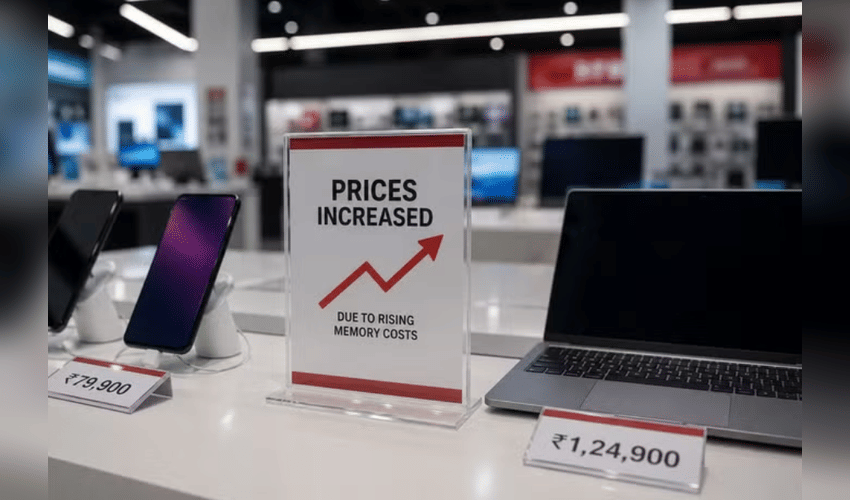

Consumers expecting smartphone, laptop, tablet, and gaming device prices to drop may have to wait much longer. The main reason behind the rising costs is the increasing price of memory components, driven largely by the explosive growth of artificial intelligence infrastructure. The huge demand for DRAM and NAND memory from AI data centres has created supply pressure, pushing up costs across the consumer electronics industry for more than a year.
Earlier estimates suggested that prices could begin improving by 2027, but recent developments indicate that the situation may remain challenging for several more years. Memory manufacturers appear to be preparing for a prolonged period of high demand, which could keep prices elevated well into the end of the decade.
Micron Technology, one of the world’s largest memory chip makers, recently revealed that it had signed 16 major supply agreements with customers across data centres, consumer electronics, and automotive industries. Most of these deals will run from 2026 through 2030 and follow take-or-pay contracts, meaning customers commit to buying certain quantities of DRAM and NAND at agreed price ranges. Micron said these agreements could help maintain stronger profit margins than it has achieved in previous memory cycles.
The current shortage began gaining momentum in 2024 when AI investment accelerated globally. Data centres running advanced AI models started consuming massive amounts of high-bandwidth memory (HBM), a specialised form of DRAM. Companies such as Samsung and SK Hynix shifted more production capacity toward HBM because it offers higher returns compared with traditional memory products.
This shift affected the supply of memory used in everyday consumer devices. Smartphone manufacturers rely on LPDDR memory, laptops and PCs require DDR5, and most electronics depend on NAND storage. With more production focused on AI-related demand, regular consumer products began facing higher component costs.
By 2026, the impact had become visible in the market. Indian smartphone company Lava told Business Standard that memory, which previously accounted for around 15 to 20 percent of a phone’s total manufacturing cost, had grown to nearly match the cost of all other components combined. Smartphone brands including OnePlus, Vivo, Samsung, and Nothing responded by adjusting prices across different product segments. Apple also began feeling the pressure. Several Mac Studio, Mac mini, and MacBook models became harder to find in India, especially higher-memory versions, with some facing extended delivery timelines. The situation became more serious when Apple CEO Tim Cook acknowledged that rising costs were becoming difficult to absorb. Cook said the company had tried to protect customers from price increases but had reached a point where passing on some costs had become unavoidable.
Following this, Apple increased prices for several products, including iPads, Macs, MacBooks, and Home devices. In India, some premium MacBook Pro models saw significant price increases, while the entry-level iPad also became more expensive. Microsoft also announced higher prices for Xbox consoles, blaming a sharp rise in memory and storage costs.
Apple’s decision is important because the company is one of the biggest buyers of smartphone memory globally. With its enormous purchasing power and strong supplier relationships, Apple usually has the ability to negotiate better prices. Therefore, when Apple itself starts transferring higher costs to customers, it indicates that the broader industry is facing serious pressure.
Smaller brands are experiencing similar challenges. Nothing co-founder Akis Evangelidis reacted to reports of Apple’s price increases by saying, “Even Apple.” The company had already decided not to introduce a budget CMF phone model because pricing conditions made it difficult to justify, while existing products also saw price adjustments. To reduce costs, some electronics companies started using older memory technologies such as DDR2 and DDR3. However, even these older components began becoming more expensive as demand spread throughout the market. The temporary solution did not solve the larger supply problem.
The biggest concern now is that this pressure could continue until 2030. Microsoft recently indicated that memory and storage costs for consoles had increased significantly and warned that prices could rise further in the coming years. Micron’s long-term agreements also suggest that supply constraints for DRAM and NAND may continue beyond 2027.
The transition to newer technologies such as DDR6 and future generations of HBM is another factor driving costs higher. Although production capacity may improve over time, the cost of advanced memory technology is expected to keep increasing. Industry analysts believe this memory cycle is different from previous ones because AI is permanently changing how manufacturing capacity is allocated. IDC’s Singh explained that memory has traditionally followed a repeating cycle, but the current situation is different because a large portion of capacity is being redirected toward AI infrastructure.
While smartphone prices may eventually stabilise as consumers adjust to the new reality, other electronics categories could face longer-term pressure. People may start using laptops, tablets, and gaming devices for longer periods instead of upgrading frequently. The result is that the era of constantly falling electronics prices may be coming to an end. AI-driven demand and memory shortages could reshape the consumer technology market, keeping device prices higher for years to come.



