


World
Trump suggests Iran may 'possibly' join the Abraham Accords, hinting at a potential shift in West Asia's geopolitical order.
Published On Mon, 25 May 2026
Kabir Sen
2 Views
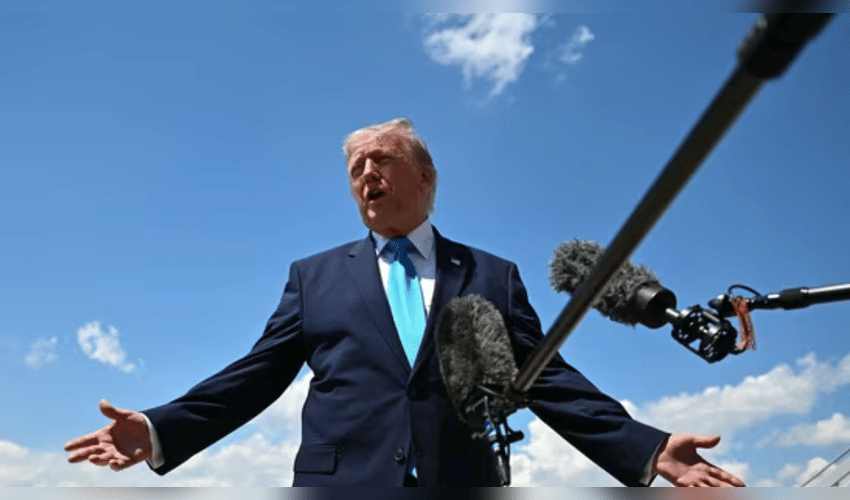

Washington: Former US President Donald Trump has indicated that Iran could “perhaps” be considered for future inclusion in the Abraham Accords, a remark that has triggered fresh discussion over the evolving geopolitical landscape in West Asia. The statement comes amid ongoing conversations around regional stability and the expansion of normalization efforts that originally began during Trump’s presidency in 2020.
The Abraham Accords currently establish diplomatic normalization between Israel and several Arab nations, including the United Arab Emirates, Bahrain, Morocco, and Sudan. The framework has been widely seen as one of the most significant diplomatic shifts in the region in recent decades. Trump’s latest comment, however, appears to extend the conceptual boundaries of the agreement. By suggesting that Iran “may one day” be part of such a framework, he has introduced a speculative but attention-grabbing possibility into an already complex geopolitical equation.
While the remark is not being treated as an official policy announcement, it comes at a time when West Asia continues to experience shifting alliances, intermittent conflict, and renewed diplomatic engagement among several regional and global powers. Iran, which has long maintained a firm opposition to normalization with Israel, remains outside the current scope of the Abraham Accords and has consistently rejected participation in such arrangements. Given this longstanding position, analysts view the idea as highly unlikely in the near term.
Still, the suggestion has drawn attention because it reflects a broader narrative of potential long-term realignment in the region, where economic cooperation, security concerns, and diplomatic pressure could gradually reshape traditional rivalries. Trump’s remarks remain speculative, but they add another layer to the ongoing global conversation about the future of Middle East diplomacy and whether long-standing divisions can eventually give way to broader regional engagement.
Disclaimer: This image is taken from Hindusstan Times.