



Economy
Trade Deals Emerge as Key Driver of Saptadhara Vision for Viksit Bharat
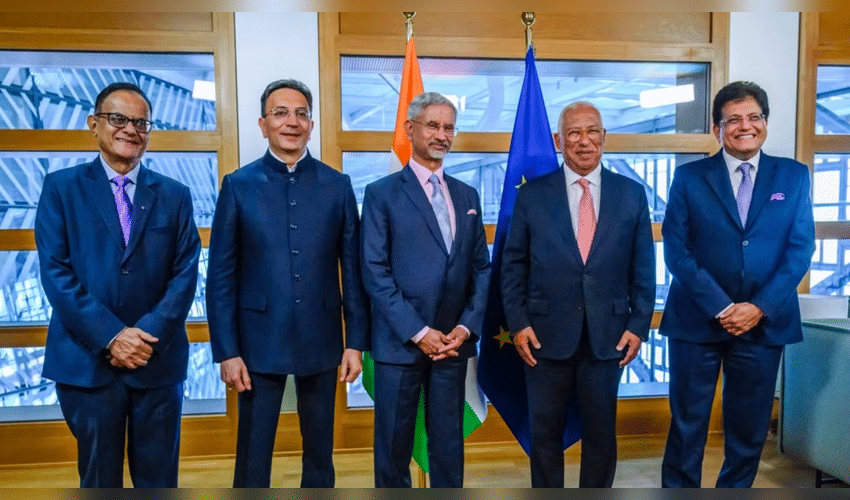

Trade agreements are increasingly being seen as a crucial part of India’s broader Saptadhara vision, with the government seeking to connect domestic growth with expanding opportunities in global markets. The seven-stream vision, outlined by Prime Minister Narendra Modi in his Independence Day address, focuses on areas including manufacturing, agriculture, technology and innovation, infrastructure, defence, the green and blue economy, and India’s cultural and soft-power influence. The underlying objective is to accelerate economic growth while strengthening India’s position in the global economy.
Trade policy has an important role to play in this strategy because access to international markets can provide Indian companies with new customers, encourage investment and support the expansion of domestic production. Recent trade agreements with major economies have therefore gained significance as India seeks to increase exports and become a more important part of global supply chains.
The government has increasingly encouraged Indian businesses, particularly micro, small and medium enterprises, to use trade agreements to expand beyond the domestic market. Lower tariffs and improved market access can create opportunities for exporters, but businesses will still need to meet international standards on quality, pricing, packaging and reliability.
The manufacturing component of the Saptadhara vision is closely linked to this objective. India wants to move towards larger and more integrated manufacturing ecosystems capable of supplying both domestic consumers and overseas markets. A stronger export base could also encourage companies to invest in new factories, technology and skilled workers.
Agriculture and food processing offer another significant opportunity. Indian products such as spices, millets, processed foods, fruits and other agricultural goods have growing potential in international markets. However, expanding agricultural exports will require better cold-chain infrastructure, food processing facilities, quality certification and efficient logistics.
For MSMEs, trade agreements could be particularly important. Smaller businesses often have products that can find buyers overseas but may lack the resources or knowledge needed to enter foreign markets. Easier export procedures, access to finance and better information about international regulations could help more such businesses benefit from newly opened markets.
Trade deals also need to be supported by improvements within India. Efficient ports, roads, railways, warehouses and digital systems are essential if exporters are to deliver products quickly and competitively. In this sense, infrastructure development under the Saptadhara framework can directly support India’s trade ambitions. The same applies to technology. Automation, artificial intelligence, digital commerce and advanced manufacturing can help Indian companies improve productivity and compete with established exporters from other countries. Technology can also make it easier for smaller firms to identify overseas customers and manage international transactions.
The bigger challenge, however, will be converting trade agreements into actual increases in exports and investment. Signing an agreement may open a foreign market, but Indian businesses must be prepared to compete once that market becomes accessible. This means the success of the Saptadhara vision will depend not only on the number of trade agreements India signs, but also on the ability of Indian companies to take advantage of them. Competitive products, dependable supply chains, skilled workers and consistent quality will be essential.
If these elements come together, trade could become one of the important links connecting India’s manufacturing, agriculture, technology and infrastructure ambitions. For a country targeting the goal of Viksit Bharat by 2047, expanding India’s role in global commerce could prove central to turning the Saptadhara vision into measurable economic gains.
Disclaimer: This image is taken from Hindustan Times.



