



News
The Tibetan Youth Congress organized a 'Black Hat March' from Dharamshala to Delhi.
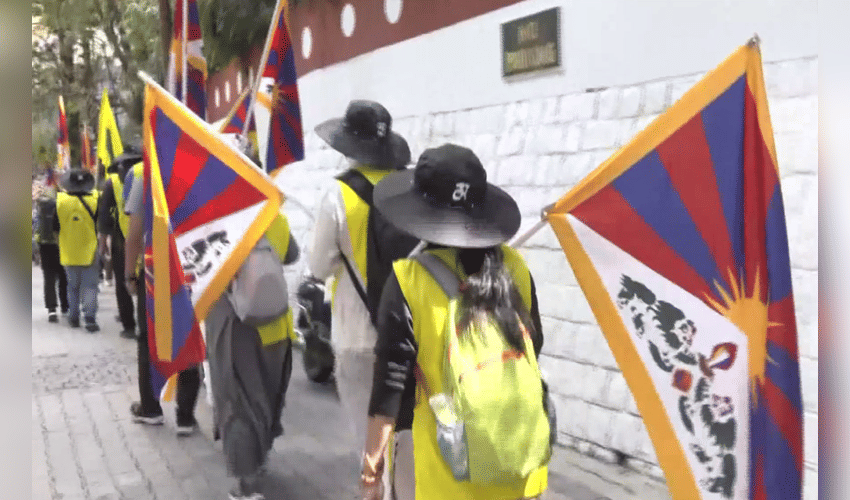

On Tuesday, the Tibetan Youth Congress launched its “Black Hat March,” a peaceful protest from Dharamshala to New Delhi aimed at drawing global attention to what it describes as ongoing genocide in Tibet. The march was inaugurated by Tibetan security minister-in-exile Dolma Gyari at Lhagyal Ri Temple in McLeodganj. Spanning a month, the march is set to conclude at the United Nations office in New Delhi on April 25.
More than 65 Tibetan activists from different parts of India are taking part in the initiative, which seeks to highlight issues such as cultural suppression, political imprisonment, and the demand for Tibetan freedom. The campaign is symbolically linked to two key dates in Tibetan history: March 31, marking the 1959 arrival of the 14th Dalai Lama and thousands of Tibetans into exile in India, and April 25, the birthday of the 11th Panchen Lama, who was taken at the age of six and has not been seen since.
Tsering Chomphel, president of the Tibetan Youth Congress, explained that the black hat represents China and its alleged efforts to spread misinformation and erase Tibetan culture. He emphasized that the Tibetan language symbol on the hat signifies resilience and the determination to preserve their identity. He added that participants from 20 regional chapters across India are involved in spreading awareness both nationally and internationally.
Activist Tsering Choekyi described the 25-day march as a call for Tibetan freedom and urged all Tibetans to take part in the movement. Exile MP Namgyal Dolkar highlighted the protest as a stand against policies like the “Ethnic Unity Law” and expressed solidarity with Tibetans inside Tibet. Indian supporter Shaswat Kapoor praised the Tibetan community’s commitment to preserving its culture and striving for independence. The march serves as a symbolic protest against the suppression of Tibetan identity, culture, and language, as well as against forced assimilation policies and the detention of political prisoners, including the 11th Panchen Lama.