



Asia In News
Pakistan's Literacy Programme in Tribal Districts Faces an Uncertain Future Amid Funding Delays
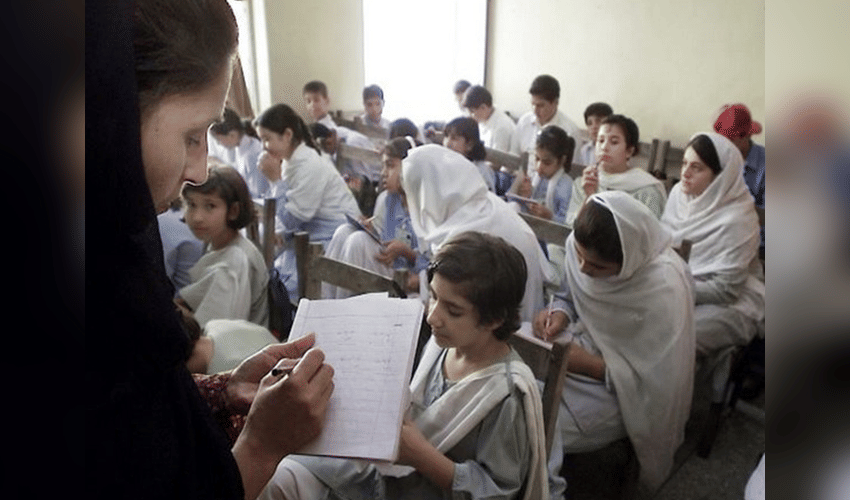

A literacy initiative launched in 2016 to provide education to out-of-school children in Pakistan's merged tribal districts is facing an uncertain future due to prolonged financial and administrative setbacks. The Literacy for All in FATA programme, introduced to improve access to education in underserved areas, has reportedly been affected by delays in funding and administrative approvals. As a result, around 269 teachers associated with the initiative have gone without salaries for more than 30 months, raising concerns over the continuity of education for more than 18,000 students enrolled in 191 Community-Based Education (CBE) centres.
Despite not being paid for nearly three years, many teachers have continued to teach in remote communities. Several educators have described the financial strain they have endured while remaining committed to their students. One teacher from Kurram district said she has been educating nearly 70 girls for the past eight years and still covers her own travel expenses to reach a remote village, despite receiving no salary for an extended period. Another teacher from Bajaur explained that convincing families to send girls to school was initially a challenge, but sustained awareness campaigns and community engagement gradually improved enrolment. She noted that many former students have since excelled in their studies.
Teachers from Orakzai and Bajaur emphasized that these community learning centres are often the only educational institutions available in villages where neither government nor private schools exist. However, many centres continue to function with minimal infrastructure, lacking essentials such as classroom furniture, teaching materials, and other basic facilities.
The programme was originally launched under the former FATA Annual Development Programme. Following the merger of the tribal districts with Khyber Pakhtunkhwa, responsibility for the initiative shifted to the Merged Areas Education Foundation (MEAF) under the province's Elementary and Secondary Education Department.
While 209 centres were initially established, 191 remain operational, supported by 269 teachers and seven literacy supervisors. A significant proportion of the enrolled students are girls, reflecting the programme's role in promoting female education in underserved regions. Education specialists have warned that more than 1.2 million children in the merged tribal districts are still out of school. They have urged the government to permanently incorporate the community-based education initiative into the provincial education system to ensure stable funding and long-term sustainability.
Although officials have proposed including the programme in the government's regular budget and the 2025-26 Annual Development Programme, approval is still pending. Until a decision is made, the future of the literacy initiative—and the education of thousands of children who rely on it—remains uncertain.



