



Asia In News
Pakistan Reports Over 3,000 Terror Incidents in 2026, Army Accuses Afghan Taliban of Providing Safe Haven to Militants
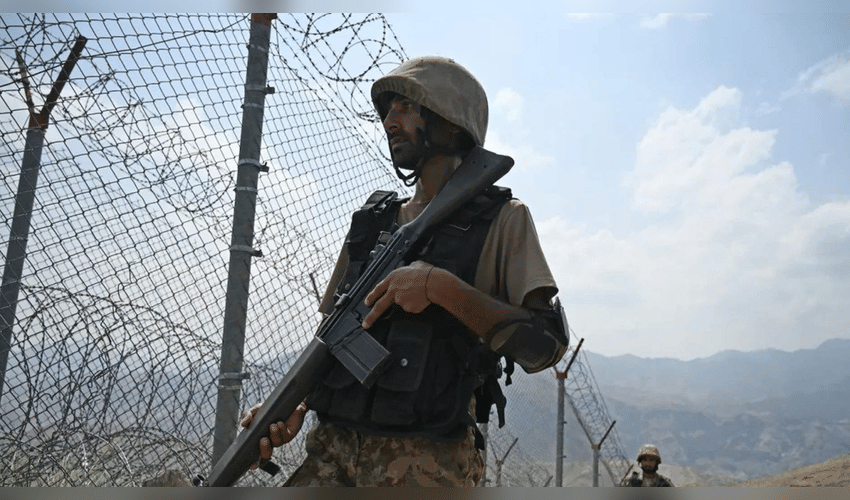

Pakistan’s military has reported that the country witnessed more than 3,000 terrorism-related incidents in 2026, resulting in the deaths of 819 people, including soldiers, police personnel, and other security officials. Inter-Services Public Relations (ISPR) Director-General Lieutenant General Ahmed Sharif Chaudhry shared the details during a press briefing in Islamabad on Friday. According to him, Pakistan recorded a total of 3,145 terror incidents during the year, with the majority occurring in Khyber Pakhtunkhwa and Balochistan.
Chaudhry said Khyber Pakhtunkhwa accounted for 1,971 attacks, while 1,148 incidents were reported in Balochistan. The remaining 26 attacks took place in other parts of the country. He described the level of violence as one of the highest Pakistan has faced, stating that security forces were eliminating an average of 10 militants every day.
The military spokesperson said that 819 Pakistani citizens lost their lives in terrorist attacks, including 303 army personnel and 194 members of police and civil armed forces. At the same time, he claimed that security forces killed 2,084 militants during counter-terrorism operations carried out across the country. According to Chaudhry, security agencies conducted 40,348 intelligence-based operations in 2026 to target militant networks. Around 31,000 of these operations were carried out in Balochistan, which remains one of the most affected regions due to insurgency and militant activity.
He also revealed that Pakistan witnessed 28 suicide attacks during the year. The ISPR chief claimed that most of these attacks involved Afghan nationals and individuals allegedly linked to Afghan security forces. Discussing the security situation in Balochistan, Chaudhry rejected claims that the province was simply facing a law and order crisis. He argued that deeper social and political issues, including the long-standing tribal Sardari system and elite control, had contributed to a lack of development and opportunities for ordinary citizens.
He said that decades-old power structures had prevented equal access to education and progress for many people in the province. According to him, resistance to reforms by certain influential groups was contributing to instability. Addressing the idea of Pakistan becoming a “hard state,” Chaudhry clarified that it did not refer to military dominance. He said a strong state was one where laws and constitutional principles applied equally to all citizens, adding that Pakistan still faced challenges in achieving that goal.
The ISPR chief further alleged that some elements in Balochistan were using violence and instability narratives to protect their own interests. He said the military would not compromise with groups involved in terrorism and would instead focus on engaging with ordinary citizens and genuine representatives of the province.
On governance reforms, Chaudhry supported calls for improving administrative structures, saying better governance was essential for Pakistan’s long-term security and stability. He noted that the military had consistently highlighted the need for institutional reforms to address the root causes of unrest. Turning his attention to Afghanistan, the army spokesperson strongly criticised the Taliban government in Kabul. He alleged that militant activities had become deeply connected with Afghanistan’s political and economic structure and accused Afghan authorities of failing to prevent cross-border terrorism.
Chaudhry claimed that Afghanistan-based militant networks continued to pose a security threat to Pakistan. He also made a controversial comparison involving India and Afghanistan, alleging that terrorism was the only common factor between the two countries, though he did not provide supporting evidence for the statement.
The figures presented by Pakistan’s military highlight the country’s continuing struggle against terrorism, with thousands of security operations conducted and hundreds of lives lost during the year. The remarks also reflect growing tensions between Islamabad and Kabul over allegations of cross-border militant activity and the broader challenge of maintaining internal security.
Disclaimer: This image is taken from Indian Defecnce News.