



Politics
Nitin Nabin Fake Video Row: Delhi Police Hands Probe to Special Cell's IFSO Unit
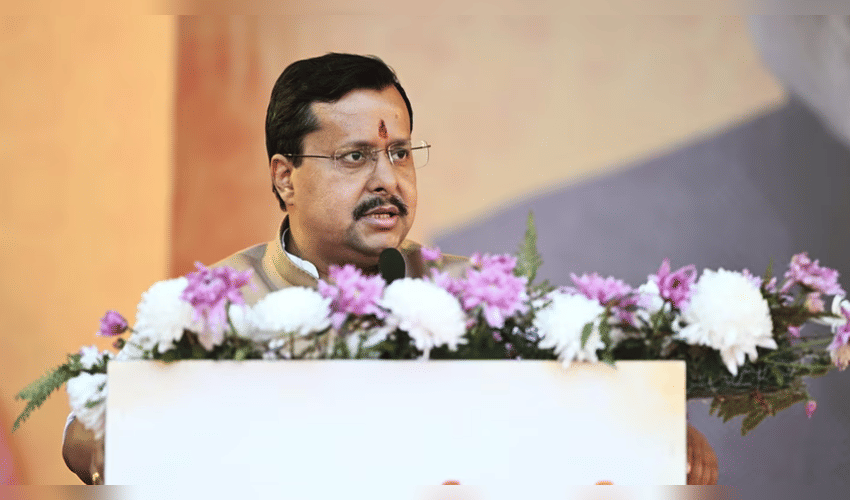

The Delhi Police has transferred the investigation into an alleged deepfake video of BJP national president Nitin Nabin to the Intelligence Fusion and Strategic Operations (IFSO) unit of its Special Cell. The development follows a complaint filed by Delhi BJP leaders, who alleged that an AI-generated video falsely attributed controversial remarks to Nabin. The disputed video, reportedly lasting around 37 seconds, allegedly features manipulated footage of Nabin's address at a BJP programme in Chandigarh on November 22. According to the BJP, the original speech was digitally altered to make it appear as though the party leader had made statements on India-China relations, Pakistan, the Shanghai Cooperation Organisation (SCO) summit and the Tejas fighter aircraft.
The BJP claimed that the video was deliberately created and circulated to mislead the public and damage the party's image. On November 23, a six-member BJP delegation led by Delhi BJP president Harsh Malhotra approached the Delhi Police and submitted a formal complaint to the Deputy Commissioner of Police, Central District. The delegation reportedly included BJP MP Praveen Khandelwal and other senior party representatives.
The party sought a criminal investigation, forensic examination of the original and allegedly manipulated footage, and identification of those responsible for creating and circulating the video. It also urged the police to examine the digital trail, including social media accounts and other electronic records, to establish the source of the content. Following the complaint, the case was assigned to the IFSO unit, which specialises in investigating cybercrime and technology-related offences. Investigators are expected to examine the video and compare it with the original recording to determine whether artificial intelligence or other digital editing techniques were used to manipulate the footage.
The police have also reportedly approached social media platforms, including Meta and X, seeking action against the circulation of the disputed content. The controversy has renewed concerns over the misuse of deepfake technology to spread political misinformation. AI-powered tools can manipulate a person's voice, facial expressions and recorded statements, making fabricated videos appear authentic to viewers.
The investigation will focus on establishing the authenticity of the video, tracing its origin and identifying those involved in its creation and distribution. Further action will depend on the findings of the police investigation. The case highlights the growing challenge faced by law enforcement agencies in tackling digitally manipulated content, particularly when viral videos involve political leaders and sensitive national issues.
Disclaimer: This image is taken from ANI.