



Technology
Mumbai Start-Up Develops Indigenous Missile Cooling System, Challenges Western Dominance
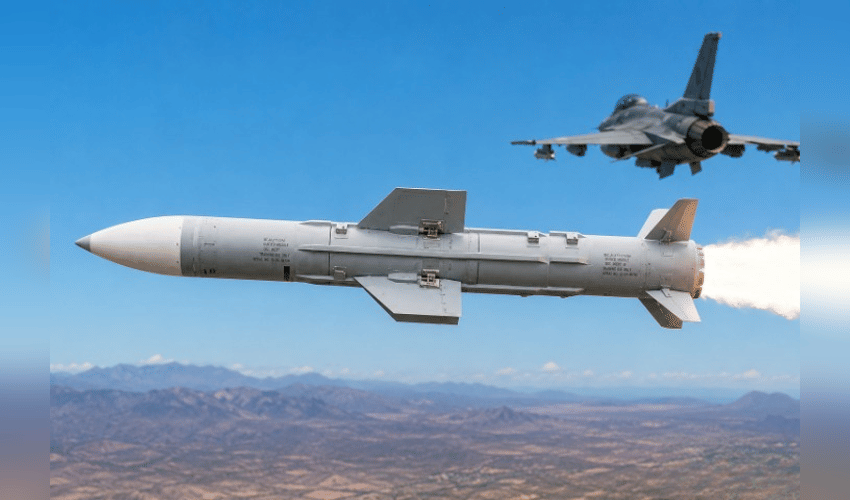

A Mumbai-based defence start-up, Techno Defence Pvt Ltd, has developed an indigenous Joule-Thomson (JT) Cooler designed for missile seekers, marking a major advancement in India’s defence technology capabilities. The development could also create opportunities in the high-value international defence market, although exports of the technology remain subject to strict Missile Technology Control Regime (MTCR) rules, Business Line reported.
The technology was developed with support from the Defence Research and Development Organisation (DRDO), following an initiative that began several years ago. The project traces its origins to a meeting around 2017–18 between IIT-Bombay alumnus Dr Pravin Salinkar and a director of a DRDO laboratory. Salinkar, who was then 75, took up the challenge of developing a specialised cooling system that had traditionally been available from only a handful of Western countries.
He later joined forces with fellow IIT-Mumbai alumnus Sudarshan Saraf to establish Techno Defence Pvt Ltd. The company brought together a compact group of engineers and technicians, with women making up a significant part of the technical workforce. The project received financial assistance through DRDO’s Technology Development Fund (TDF), allowing the team to work on the design and manufacture of the miniature JT Cooler.
The device performs a crucial function inside missiles equipped with infrared seekers. It rapidly cools infrared detectors and focal plane arrays to extremely low temperatures, reaching roughly –196°C. Such cooling is necessary because infrared sensors operating at normal temperatures generate thermal noise, commonly referred to as dark current.
Excessive background noise can interfere with weak infrared signals emitted or reflected by distant targets. By cooling the sensor, the JT Cooler significantly reduces this noise, allowing the seeker to identify and track targets more accurately. The technology is considered strategically important and falls under MTCR controls. Until now, advanced versions of such systems have largely been associated with countries including the United States, France and Israel. While missile systems based on satellite navigation may not require this type of cooling, infrared-guided missiles depend heavily on it for effective seeker performance.
Techno Defence developed its own manufacturing approach rather than simply replicating existing foreign designs. The company worked with small-scale and cottage industries to develop specialised production methods and equipment needed for the system. Manufacturing the cooler involves highly precise processes, including microscopic assembly work, the use of high-purity materials and production in controlled environments. Each stage requires strict quality checks because even small manufacturing variations can affect the reliability of equipment intended for defence applications.
The project was completed during 2023–24 and subsequently handed over to DRDO for testing. The trials were successful, validating the performance of the indigenous system and strengthening India’s position in a highly specialised area of missile technology. The development has also reportedly generated interest among overseas buyers. However, any export of the technology would require the necessary government approvals because of MTCR-related restrictions.
The achievement is significant for India’s broader push towards defence self-reliance. Developing the JT Cooler domestically could reduce dependence on imported components while giving Indian industry an opportunity to participate in specialised global defence supply chains. Techno Defence operates as a joint venture with Technocraft Industries (India) Limited. Its work has also involved DRDO’s Solid State Physics Laboratory and Research Centre Imarat, bringing together private-sector manufacturing expertise and government research capabilities.
The project illustrates how a relatively small engineering team, supported by indigenous suppliers and government-backed funding, was able to develop a sophisticated component for missile systems. It also highlights the potential of India’s private defence sector to address complex technological requirements and eventually compete in specialised international markets. With initiatives such as the Technology Development Fund encouraging collaboration between DRDO and private companies, developments like the JT Cooler could play an increasingly important role in expanding India’s domestic defence manufacturing ecosystem and technological independence.