



Military
Indian Navy Ensures Crucial LPG Supply Passage via Hormuz Amid Diplomatic Efforts with Iran
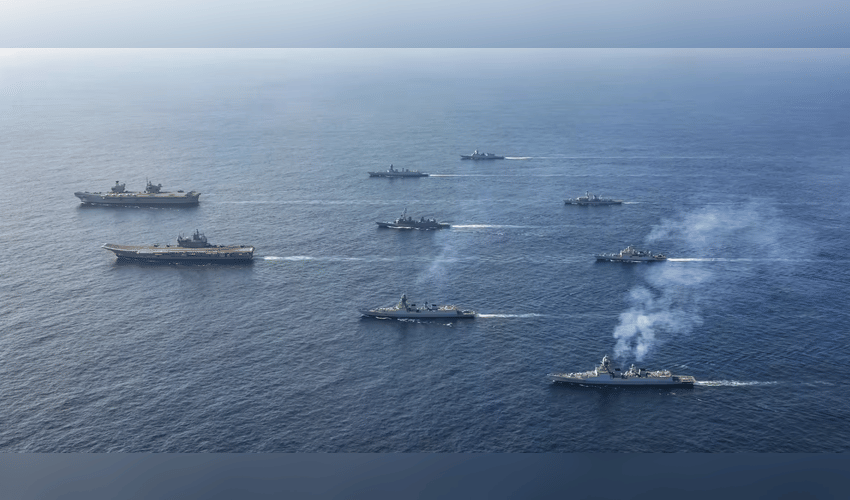

The Indian Navy has successfully escorted two LPG tankers, Shivalik and Nanda Devi, through the volatile Strait of Hormuz, amid rising tensions in the Gulf. Conducted under Operation Sankalp, the operation saw multiple warships safeguarding the vessels’ transit from the Gulf of Oman. Satellite imagery confirmed the naval deployment, reflecting India’s proactive approach to securing its maritime interests.
The tankers carry a total of 92,700 tons of LPG and are scheduled to reach Mundra and Kandla ports on 16 and 17 March. This shipment meets roughly 1.25 days of India’s national cooking gas demand, providing relief after a two-week blockade disrupted supplies. The operation underscores the Navy’s critical role in preventing household shortages.
Diplomatic engagement was key to the mission’s success. Iran granted safe passage following direct discussions with Indian authorities. Iran’s Ambassador to India, Mohammad Fathali, highlighted Tehran’s commitment to facilitating Indian-bound vessels, citing the countries’ “longstanding friendship” and shared interests. While restrictions remain for ships associated with certain adversarial nations, this cooperation demonstrates a pragmatic approach amid regional tensions.
India’s energy dependence on the Gulf is significant, with about 60% of LPG imports, and 85–90% of them transiting the Strait of Hormuz. Any prolonged disruption directly threatens domestic energy security. The recent two-week blockade had already spiked daily LPG orders to 88.8 lakh cylinders, prompting government appeals against panic buying.
The operation also carries economic implications. Conflict in West Asia has sharply raised war-risk insurance premiums, in some cases five to twenty-five times higher, increasing costs for tanker operators and potentially fueling inflation in India’s energy sector. Indian ports prioritized berthing for these vessels to speed unloading and distribution. Operation Sankalp, initiated in response to previous maritime threats, showcases India’s strategic maritime doctrine. Naval escorts protect Indian-flagged ships while reinforcing freedom of navigation in international waters. The mission builds on past successes, demonstrating India’s capacity to secure critical sea lanes responsible for over 80% of its oil and gas imports.
The safe passage of Shivalik and Nanda Devi sets a precedent for the remaining 22 Indian-flagged vessels in the Gulf. Continued diplomacy and naval protection could stabilize shipping, normalize insurance rates, and ensure steady energy flows. Indian authorities remain in close contact with regional governments to coordinate future transits.
However, renewed hostilities could threaten these vessels, leading to LPG shortages, stockpiling, and emergency measures like rationing or airlifting. India may respond by diversifying suppliers, including the U.S., Australia, and African spot markets, to reduce Gulf reliance. The episode underscores the intersection of naval power, diplomacy, and energy security. Iran’s cooperation reflects shared economic interests, even amid sanctions and regional conflicts. For India, balancing relations with Iran, Gulf states, and Western allies will remain crucial for long-term maritime stability. Operation Sankalp exemplifies India’s resolve to safeguard its economy and energy supplies amid an evolving Gulf landscape, with implications for household and industrial stability nationwide.