



News
India's Medical Research Capabilities Are Reaching New Levels, Says Rajnath Singh
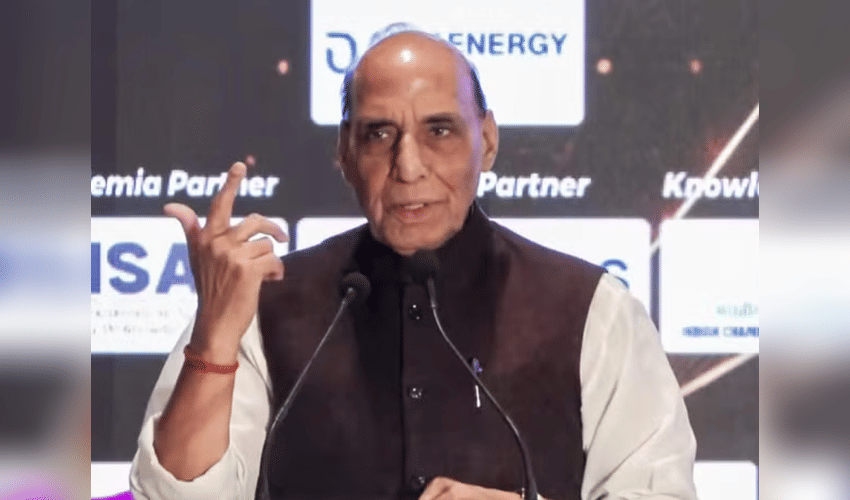

Defence Minister Rajnath Singh on Monday said India is making significant progress in medical research, highlighting the country's growing ability to create homegrown healthcare solutions using advanced technologies such as gene therapy and nuclear medicine. Speaking at the 22nd convocation ceremony of King George's Medical University (KGMU) in Lucknow, Singh said India's healthcare system has become more self-reliant, accessible, affordable, technologically advanced, and focused on public welfare than ever before.
He noted that Indian researchers have successfully developed an indigenous gene therapy for haemophilia, marking a major breakthrough in the treatment of the inherited blood disorder. He also pointed to scientists in Pune who have created an advanced nanomedicine for breast cancer treatment, showcasing India's expanding capabilities in cutting-edge medical science. The Defence Minister said the government's Production Linked Incentive (PLI) scheme has accelerated domestic manufacturing of medical devices, reducing dependence on imports while strengthening India's healthcare infrastructure.
Highlighting recent achievements, Singh said India introduced Nafithromycin in 2024, the country's first domestically developed macrolide antibiotic, which is expected to play an important role in treating Community-Acquired Bacterial Pneumonia. He also recalled that India developed its first indigenous MRI machine in 2023, describing it as affordable, lightweight, high-field, and capable of delivering faster imaging.
Singh further said affordable healthcare has become more accessible through the network of over 19,000 Jan Aushadhi Kendras, which provide quality medicines to citizens at significantly lower prices. Addressing doctors and medical professionals, he urged them to prioritize their own physical and mental well-being, acknowledging that the medical profession involves long hours and high levels of stress that can affect personal health.
The minister also praised the healthcare transformation in Uttar Pradesh under Chief Minister Yogi Adityanath, stating that the state's medical infrastructure has expanded rapidly over the past nine years. According to Singh, Uttar Pradesh had only 17 medical colleges before 2017, but the number has now increased to 81 institutions. He added that the state is home to two operational AIIMS campuses and has successfully achieved the goal of having at least one medical college in every district.
Emphasizing the importance of medical education, Singh said improving healthcare services requires a larger pool of qualified doctors and specialists. He added that the government has therefore undertaken an unprecedented expansion of medical education to strengthen the country's healthcare system for the future.



