



Economy
India Loses Rs 14.1 Trillion Annually to Corrosion, Infrastructure and Energy Among Worst-Hit: NRI Report
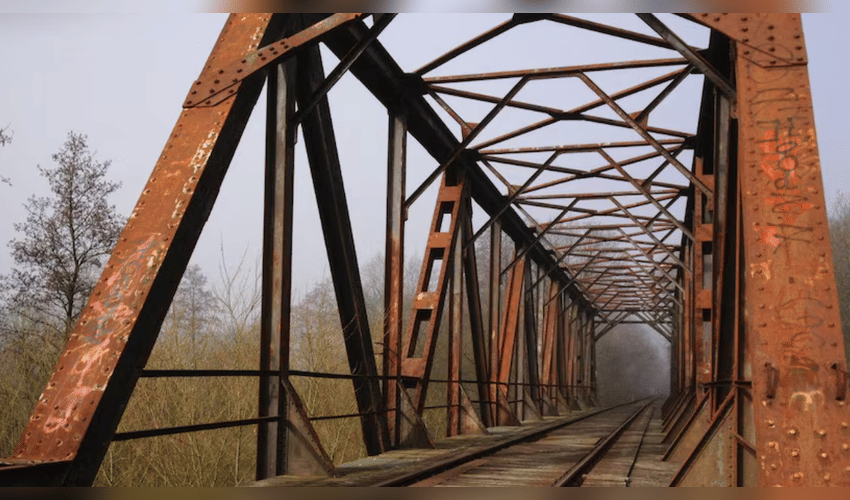

India is losing an estimated 4.3% of its Gross Domestic Product (GDP)—equivalent to nearly $180 billion (₹14.1 trillion) every year due to corrosion, according to a new report by the Nomura Research Institute (NRI). The study highlights that sectors such as infrastructure, transportation, power, and telecommunications are bearing the largest share of these losses, underscoring the growing economic impact of deteriorating public assets.
In its report, Built to Last: Adopting Global Best Practices to Reduce Corrosion Losses in India's Infrastructure, NRI notes that the global average economic loss from corrosion is around 3.4% of GDP, significantly lower than India's figure. The report estimates that implementing effective corrosion prevention and management strategies could raise India's GDP by nearly 1.5%, resulting in annual savings of about $63 billion (₹5 trillion).
The report argues that corrosion should no longer be viewed merely as an engineering concern but as a national economic and policy issue. With India investing heavily in highways, railways, affordable housing, renewable energy, and other large infrastructure projects, improving the durability of these assets has become increasingly important. According to the study, prioritising long-term asset performance over lower upfront construction costs could substantially reduce maintenance expenses and replacement costs in the years ahead.
The findings come as India continues its rapid economic expansion. The country's GDP reached approximately $4.2 trillion in FY26, supported by steady annual growth of 6–7% over the past decade. The government is aiming to transform India into a $5 trillion economy in the near future and eventually achieve a $30–40 trillion economy by 2047 under its Viksit Bharat vision. However, the report warns that rapid urbanisation, industrial growth, and large-scale infrastructure development are also increasing the country's exposure to corrosion, placing greater pressure on public finances through higher maintenance costs and shorter asset lifespans.
Infrastructure emerges as one of the most vulnerable sectors in the report. NRI points out that many engineering and procurement practices in India continue to focus on minimising initial construction costs rather than ensuring the long-term durability of assets. As a result, corrosion is accelerating the deterioration of roads, bridges, buildings, and other public infrastructure, leading to more frequent repairs and higher replacement costs.
The report also identifies the power sector as the industry most severely affected by corrosion, with losses estimated at 10.1% of its sectoral GDP. As India rapidly expands its renewable energy capacity and electricity transmission network, stronger corrosion protection measures will be essential to improve reliability and extend the lifespan of critical infrastructure.
India's telecommunications sector also faces significant challenges. With more than 813,000 telecom towers supporting nearly 2.95 million base transceiver stations, the report recommends expanding corrosion protection beyond primary structural components to include auxiliary equipment. It also calls for regular inspection and maintenance programmes to enhance the durability of telecom infrastructure.
For Indian Railways, corrosion is estimated to cause annual losses of around $3 billion (₹23,788 crore). The report suggests replacing traditional repainting methods with long-lasting corrosion protection systems while adopting preventive maintenance and better material selection to reduce maintenance costs and extend the service life of railway assets. Beyond these sectors, the report also highlights the impact of corrosion on buildings, roads, bridges, and the automotive industry. It argues that as India's infrastructure continues to expand, engineering standards, maintenance practices, and procurement policies must evolve to focus on lifecycle performance rather than just initial investment.
The study concludes that tackling corrosion is not simply about reducing maintenance costs but about protecting national investments and supporting long-term economic growth. By adopting global best practices in corrosion management, improving preventive maintenance, and designing infrastructure with durability in mind, India could significantly reduce economic losses while ensuring better returns on its massive public infrastructure spending.
Disclaimer: This image is taken from Canva.



