



Military
IAF Chief Calls on ADA to Adhere to Delivery Schedules to Ensure Operational Readiness
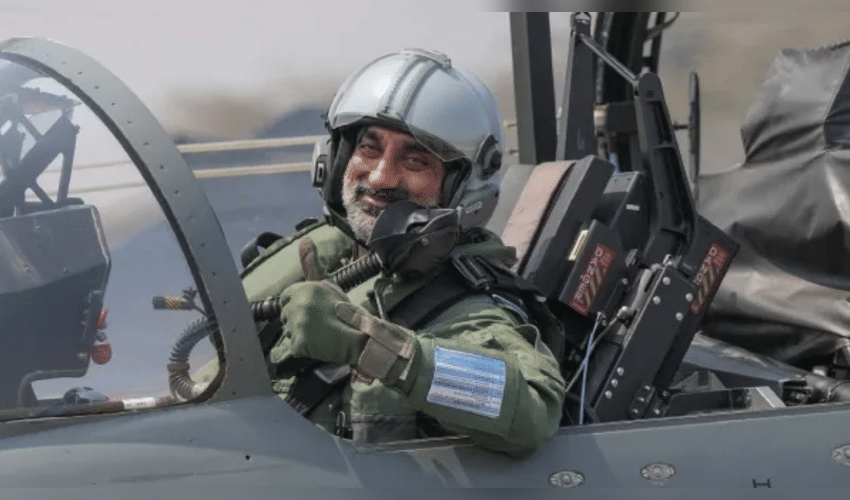

Air Chief Marshal A P Singh, Chief of the Air Staff, has urged the Aeronautical Development Agency (ADA) to strictly adhere to delivery schedules for critical projects to ensure the Indian Air Force (IAF) remains operationally ready amid evolving security challenges. He made these remarks in Bangalore during the inauguration of the two-day national seminar, ‘Aeronautics 2047’, organized by ADA at the Centre for Airborne Systems (CABS).
The seminar also commemorates 25 years of the Light Combat Aircraft (LCA) TEJAS program, a milestone Air Chief Marshal Singh congratulated ADA for achieving. He stressed that delays in inductions could impact IAF preparedness in an increasingly dynamic geopolitical environment. Dr Samir V Kamat, Secretary of the Department of Defence Research and Development and Chairman of DRDO, emphasized the need to develop indigenous technologies to reduce import dependence, aligning with the vision of a developed India by 2047.
The event brought together experts from industry, academia, and the aerospace sector to discuss innovations in aircraft manufacturing, digital production methods, aerodynamics, propulsion, flight testing, and digital twin technologies. Sessions also addressed certification, avionics integration, flight control, maintainability, AI in design, and precision manufacturing of aircraft components.
A significant focus was on the evolution of the TEJAS aircraft, designed entirely by ADA, which has completed over 5,600 successful flights with contributions from over 100 government labs, academic institutions, and industries. The TEJAS incorporates advanced technologies like carbon composites, fly-by-wire systems, glass cockpits, and digital utility management, establishing India’s capabilities in indigenous fighter development.
Future variants, including TEJAS MK-1A, MK-2, and naval versions, are under development to meet operational requirements with upgraded avionics, enhanced mission systems, and improved indigenous content. Currently, 38 TEJAS aircraft—32 fighters and six trainers—are inducted across two IAF squadrons. The seminar also includes an exhibition by PSUs, industries, and MSMEs, showcasing indigenously developed aerospace products and reflecting the growing domestic manufacturing ecosystem.
Air Chief Marshal Singh’s emphasis on timely delivery aligns with India’s strategic priorities, particularly amid rising border tensions and regional security challenges. Dr Kamat’s focus on self-reliance underscores Atmanirbhar Bharat objectives, fostering technological sovereignty and reducing foreign dependency.
‘Aeronautics 2047’ serves as a platform for collaboration, innovation, and forward-looking R&D in aeronautics. The TEJAS program exemplifies successful indigenization, program management, and operational reliability, setting the stage for advanced variants and naval adaptations, positioning India for aerospace leadership by 2047.



