



Asia In News
How Gen Z Is Changing the Face of Protests With Memes and Viral Content
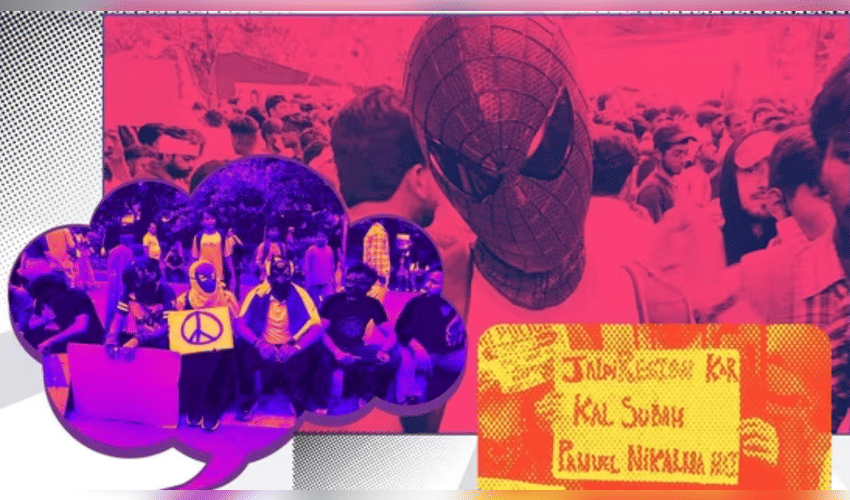

Protest movements are evolving in the digital age, and Generation Z is at the forefront of that transformation. Across India, young demonstrators are increasingly replacing traditional slogans with memes, viral videos, humorous placards and pop culture references, creating a new style of activism that resonates both on the streets and across social media platforms. The trend has come into sharp focus during the ongoing youth-led protests over issues such as examination paper leaks and demands for greater accountability in the education system. Instead of relying solely on speeches and conventional protest chants, participants have turned internet culture into a powerful communication tool, using short-form videos, trending audio clips and witty one-liners to amplify their message.
At protest sites in New Delhi and other cities, demonstrators have carried placards inspired by popular memes, while social media has been flooded with reels featuring trending music, gaming references and satirical commentary. Many of these videos have attracted millions of views, helping the movement reach audiences far beyond those physically present at the demonstrations.
Observers say this marks a significant shift in how political and social movements are communicated. Unlike previous generations, which relied heavily on television coverage and newspaper headlines, Gen Z participants often document events themselves through Instagram, X, YouTube and other digital platforms, turning every smartphone into a broadcasting tool.
Political analysts believe this reflects the communication habits of a generation that has grown up in the age of social media. Instead of lengthy speeches, young protesters often prefer concise visual content that can quickly capture attention and be widely shared online. The strategy has enabled protest messages to spread rapidly while encouraging greater public engagement through comments, reposts and discussions.
Humour has emerged as one of the defining features of this new style of protest. Satirical posters, playful slogans and internet jokes are being used to express frustration over issues ranging from education reforms to unemployment. Supporters argue that humour makes complex issues easier to understand and encourages wider participation, especially among younger audiences who consume most of their information online.
However, experts caution that meme-driven activism also presents challenges. While viral content can increase visibility, reducing complex policy debates to short jokes or videos may oversimplify important issues. There are also concerns that misinformation can spread quickly through highly shareable content if users fail to verify facts before posting. Despite these concerns, the growing influence of digital culture on public demonstrations is becoming increasingly difficult to ignore. Recent protests in India suggest that online engagement is now as important as physical participation, with success often measured not only by the size of crowds but also by the reach of hashtags, reels and viral posts.
The trend is not limited to India. Around the world, younger generations are blending internet culture with activism, using memes, short videos and digital storytelling to organise campaigns and keep public attention focused on social and political issues. As social media continues to shape public discourse, analysts believe future protest movements are likely to become even more visual, interactive and digitally driven. For Gen Z, memes are no longer just a form of entertainment—they have become an effective language of protest, allowing a generation to communicate its concerns in a way that is both relatable and instantly shareable.



