



Economy
Ethanol and the Political Power of Crops: India's E20 Push Reshapes Agriculture
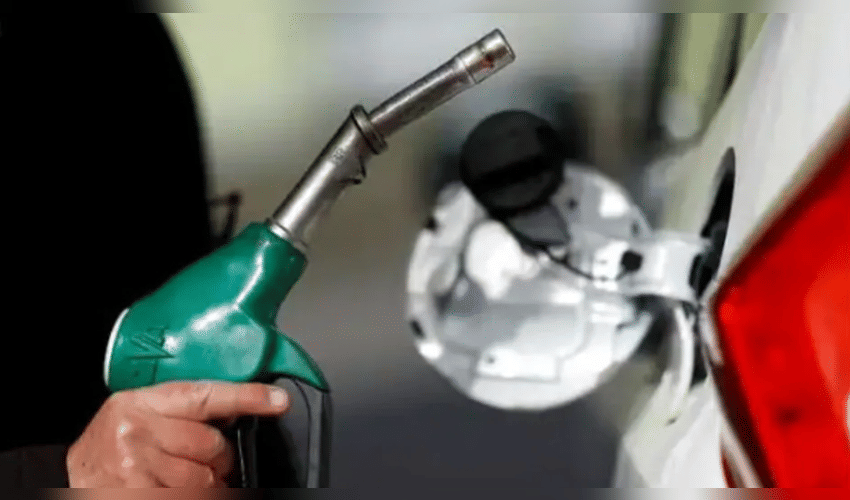

India’s ethanol blending programme is increasingly influencing the country’s agricultural economy, with growing demand for ethanol feedstocks such as maize and sugarcane beginning to affect crop choices, farm incomes and the wider debate over food security. India has made rapid progress in its ethanol-blending programme in recent years. The country achieved a 20% ethanol blending rate in petrol during the 2025-26 supply year, five years ahead of its earlier target. Government data shows that ethanol blending has increased sharply from less than 1.5% in 2013-14 to 20% in 2025-26, while domestic ethanol production capacity has expanded substantially.
The government has described the programme as an important component of India’s energy-security strategy. By replacing a portion of petrol with domestically produced ethanol, India aims to reduce its dependence on imported crude oil, lower foreign-exchange expenditure and create an additional market for agricultural commodities. The policy, however, is having consequences far beyond the fuel sector.
As ethanol producers look for reliable supplies of feedstock, crops such as maize are gaining a new source of demand. Maize has traditionally been important for food, poultry feed, livestock and several industrial applications. The arrival of a growing ethanol market means producers now have another major buyer, potentially changing the economics of cultivation. For farmers, this can be an attractive development. A dependable market can reduce some of the uncertainty associated with agricultural prices and give growers greater confidence when deciding which crop to plant. In parts of Punjab, for example, the expansion of ethanol demand has encouraged interest in maize as an alternative to paddy. Farmers and millers have argued that the crop can provide a new commercial opportunity while also helping reduce dependence on water-intensive rice cultivation.
But the shift has also raised questions about what happens when the same crop is required for both fuel and food-related industries. The Economic Survey 2025-26 pointed to an emerging tension between energy security and food security. Stronger demand for ethanol feedstocks could encourage farmers to move towards crops such as maize at the expense of pulses and oilseeds. Such a change could eventually increase India's dependence on imports of commodities that are important to the domestic food supply.
The issue becomes particularly important because maize is a major input for the poultry and livestock industries. If ethanol producers absorb a larger share of available maize, feed manufacturers may face higher procurement costs. Those costs can move through the supply chain and eventually affect prices of products such as eggs, poultry and other animal-based foods.
Sugarcane presents another side of the ethanol story. India’s sugar industry has become an important source of ethanol, allowing sugar mills to diversify their revenues and reduce their dependence on sugar sales. Government policies encouraging the diversion of sugar-sector products towards ethanol have helped strengthen the link between the sugar industry and the fuel market. For sugar mills and cane farmers, the arrangement can provide an additional source of demand. However, sugarcane is also a water-intensive crop, making its expansion a concern in regions where groundwater resources are already under pressure. This means the success of ethanol production cannot be measured only in terms of fuel output or foreign-exchange savings. The impact on water use and regional cropping patterns also matters.
The government has highlighted the economic benefits of the ethanol programme. According to official figures, ethanol blending has helped reduce crude-oil consumption and generate substantial foreign-exchange savings since the programme began expanding. The government has also said that farmers have benefited through payments generated by the growing demand for ethanol feedstocks.
The programme has nevertheless become increasingly political. The debate over E20 has expanded from agricultural markets and energy security to questions involving consumers, automobile manufacturers and trade policy. Critics have raised concerns about vehicle compatibility, fuel efficiency and the broader economic consequences of higher ethanol blending, while the government has maintained that the programme is an important part of India’s long-term strategy to reduce oil dependence.
The issue has also surfaced in India's trade discussions with the United States. The government recently rejected reports that it had committed to importing large quantities of US fuel ethanol as part of a trade agreement, maintaining that the domestic ethanol-blending programme is intended to rely on domestic production. For Indian farmers and ethanol producers, the question of imports is significant because imported ethanol could compete with domestically produced supplies. For policymakers, it is another reminder that ethanol has evolved into a strategic commodity connecting agriculture, energy, trade and rural economics.
The bigger challenge now is maintaining a balance between these competing priorities. India needs to reduce its exposure to international crude-oil prices and improve energy security, but it also needs sufficient supplies of food, animal feed and edible oils. If ethanol incentives significantly change cropping patterns, the country could potentially reduce one form of import dependence while increasing another.
The future direction of the ethanol programme may therefore depend increasingly on diversification. Greater use of agricultural residues, waste-based feedstocks and advanced biofuel technologies could help reduce competition between fuel production and food markets. At the same time, policies supporting pulses, oilseeds and other essential crops will remain important if India wants to maintain a balanced agricultural system.
The rise of ethanol has demonstrated the growing political power of agricultural commodities. A government decision taken in the energy sector can influence what farmers grow, what industries pay for raw materials and what consumers eventually pay for food. India’s E20 journey is therefore no longer simply a story about mixing ethanol with petrol. It is becoming a much larger story about the future of Indian agriculture and how the country balances its demand for food, fuel, farmer income and energy independence.



