



Technology
Drifting SpaceX Rocket Set for Accidental Moon Crash, Giving Scientists a Rare Opportunity
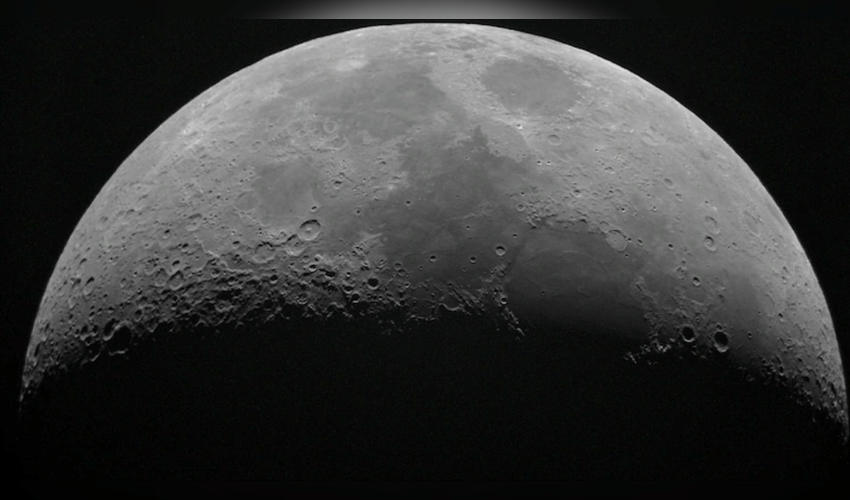

A discarded SpaceX rocket stage is expected to slam into the Moon at high speed in the coming months, creating an impact that scientists say could offer a rare chance to study how fresh craters form on the lunar surface. The rocket stage, which completed its mission after launching two lunar landers in early 2025, has been drifting through deep space for months. Without enough fuel to return to Earth or steer into a stable orbit, the spent booster gradually fell under the combined gravitational influence of the Earth and the Moon, eventually placing it on a collision path.
According to current tracking estimates, the rocket stage is expected to strike the Moon at nearly 5,400 mph (around 8,700 km/h). The impact is projected to occur near the Einstein Crater, located on the Moon's far western edge. Astronomers believe the collision will carve out a new crater measuring roughly 27 metres (90 feet) across, while ejecting a plume of lunar dust and rocks into space. Although the event poses no threat to Earth, it is expected to provide researchers with valuable data on lunar geology and impact dynamics.
Scientists say such events are rarely predictable. Unlike naturally occurring meteorite strikes, the path, speed and approximate location of this rocket impact are already known, allowing observatories and lunar spacecraft to prepare in advance and monitor the event closely. Researchers hope to analyse the fresh crater to better understand the Moon's surface composition, the behaviour of debris after high-speed impacts, and how similar collisions may affect future lunar infrastructure. The findings could prove valuable as multiple countries and private companies continue planning long-term missions and potential human settlements on the Moon.
Several orbiting spacecraft are also expected to image the impact site before and after the collision, enabling scientists to compare surface changes in unprecedented detail. The incident has also renewed attention on the growing issue of space debris beyond Earth's orbit. While many satellites in low-Earth orbit are designed for controlled re-entry after completing their missions, rocket stages used for deep-space missions often remain adrift for years unless specific disposal plans are in place.
Experts say that as lunar exploration accelerates, responsible management of spent spacecraft and rocket hardware will become increasingly important to reduce unnecessary debris around the Moon and other celestial bodies. While the upcoming impact is accidental, scientists view it as a unique research opportunity. Every well-documented collision helps improve understanding of planetary surfaces, strengthens computer models used in space exploration, and supports preparations for future robotic and human missions beyond Earth.
Disclaimer: This image is taken from NDTV.



