



News
BJP's gains over AAP from Parliament to states reshape the political scene in Punjab and Gujarat.
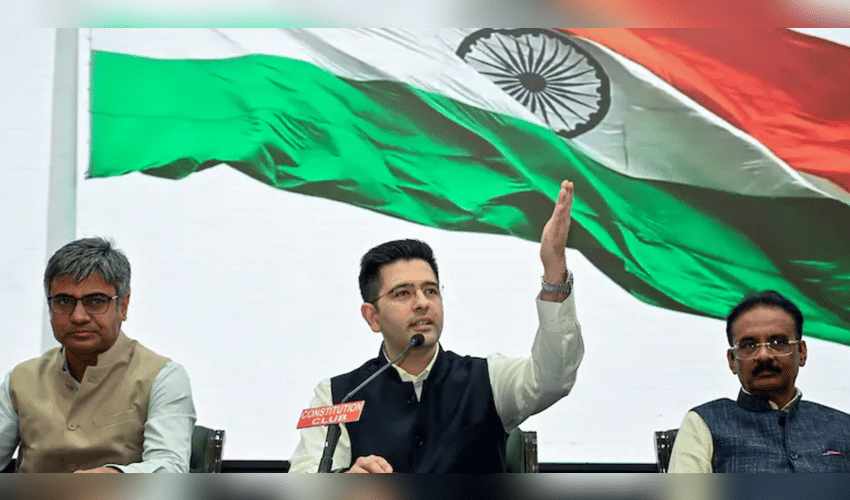

After seven Aam Aadmi Party (AAP) Rajya Sabha MPs joined the BJP, political tensions have escalated across a wide region, including Punjab, Delhi, Goa, and Gujarat. Senior BJP leaders claim the party achieved multiple strategic gains simultaneously. Attention is now focused on whether this split in AAP’s Rajya Sabha wing could trigger similar defections among its Lok Sabha MPs and MLAs in Punjab and Delhi. This concern has long troubled the AAP, which has repeatedly accused the BJP of attempting to weaken it through “Operation Lotus.”
The impact of these developments is expected to be significant, especially as the BJP aims to strengthen its position not only in Punjab but also ahead of upcoming elections in Gujarat and Goa. While much political focus was on West Bengal, the BJP is believed to have quietly executed its strategy in Delhi, which could have long-term consequences.
Sources suggest the BJP had been preparing this move within the AAP for some time. Leaders such as Swati Maliwal were reportedly in contact with BJP figures, while Raghav Chadha was also being closely observed due to signs of dissatisfaction with AAP leadership. However, internal dynamics, including rivalries within the party, influenced coordination among the MPs involved in the split.
Among those who switched sides, several were already under pressure or had shown ideological or political differences with the AAP leadership. Others maintained limited political engagement or expressed views closer to the BJP on certain issues. One key strategic advantage for the BJP is believed to be access to influential figures within AAP’s organisational structure, particularly in Punjab.
The BJP’s reported plan is to leverage these connections to weaken AAP’s base in Punjab ahead of the 2027 state elections. Although a formal legislative split would require a large number of MLAs, analysts do not rule out the possibility of defections closer to the elections. A similar situation is being monitored in Delhi as well.
In Punjab, where the BJP currently has a limited presence, the party aims to expand its footprint independently, having ruled out an alliance with the Shiromani Akali Dal. It plans to strengthen its outreach in both urban and rural regions while targeting AAP legislators for potential support.
The recent developments are also seen as a setback for AAP ahead of local body elections in Gujarat, where the party is attempting to expand its influence in key regions such as South Gujarat and Saurashtra. In Goa, too, AAP has been trying to consolidate its base in coastal and minority-dominated areas. The BJP’s gain in Rajya Sabha numbers is expected to strengthen its legislative position in the upper house, making it easier for the government to pass key bills. The move is being described by party leaders as a significant political advantage ahead of the next election cycle.



