



Asia In News
Baloch Activist Begins Hunger Strike Outside UK Prime Minister's Office to Protest Human Rights Concerns
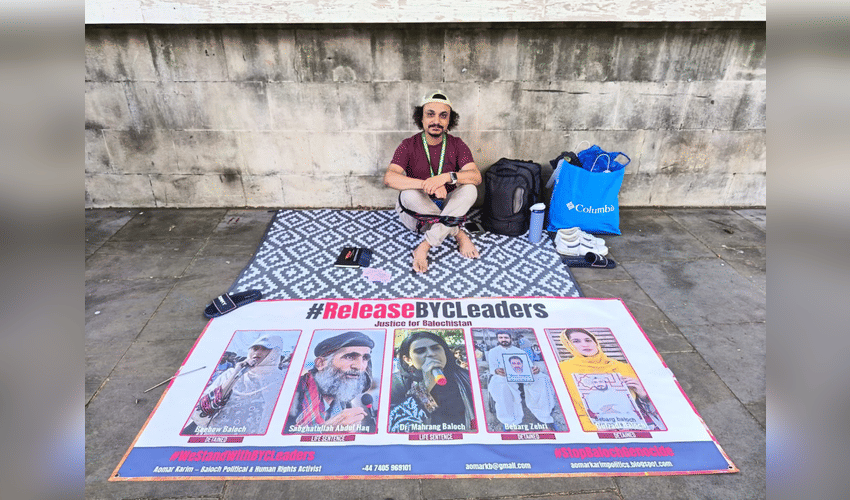

Baloch activist Aomar Karim has begun a peaceful hunger strike outside 10 Downing Street in London, urging the international community to pay closer attention to the human rights situation in Pakistan's Balochistan region. The protest is aimed at highlighting what Karim describes as an ongoing crackdown on Baloch political activists.
In a message shared on X, Karim announced that the demonstration started on Thursday and would continue until 6:30 PM on Friday, 3 July. He said the hunger strike is an act of solidarity with the people of Balochistan and is intended to draw global attention to their concerns. Karim said the immediate trigger for the protest was the reported sentencing of Baloch rights campaigners Mahrang Baloch and Sibghatullah Shahji to life imprisonment. He also pointed to the continued detention of Beebow Baloch, Bebarg Zehri, and Gulzadi Baloch, describing these cases as examples of what he believes are serious human rights violations.
Karim argued that such developments should not be overlooked and called for greater international awareness of the challenges faced by Baloch activists. He maintained that his protest seeks to encourage governments and rights groups to take notice of the situation. The activist said he plans to remain outside the British Prime Minister's official residence throughout Thursday and Friday before relocating the demonstration to the UK Foreign, Commonwealth and Development Office (FCDO) on King Charles Street later on Friday.
Karim also appealed to journalists, Members of Parliament, human rights organisations, members of the Baloch diaspora, and supporters of the cause to participate in the protest. He urged people to stand in solidarity with the Baloch community, saying that every show of support helps increase international attention.
Balochistan has for years been the focus of allegations involving enforced disappearances, prolonged detentions, and targeted killings. Human rights groups have repeatedly expressed concern over reports that some individuals disappear for extended periods, while others are later found dead or remain in custody without transparent legal proceedings. Critics argue that these issues have deepened public distrust, increased insecurity, and complicated efforts to promote stability, justice, and accountability in the region.



