



Technology
After dominating space exploration, SpaceX is now turning its attention to bigger opportunities in AI.
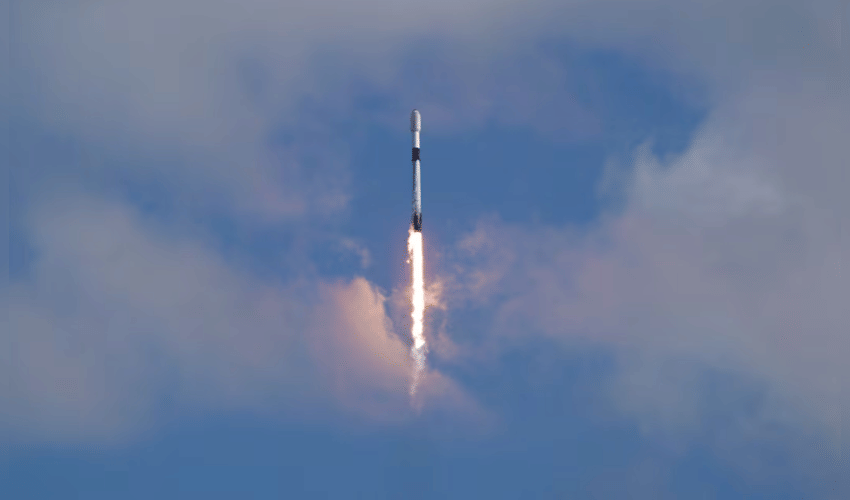

Over the past 25 years, Elon Musk has helped transform space travel, turning space exploration into successful commercial ventures. Now, SpaceX is shifting its focus toward an even larger opportunity: developing artificial intelligence for enterprise use. According to an S-1 filing reviewed by Reuters, SpaceX estimates its total addressable market could reach $28.5 trillion, a key figure that reflects the maximum possible revenue if it captured the entire market. The company expects over 90% of this opportunity—around $26.5 trillion—to come from the AI sector, with $22.7 trillion specifically linked to enterprise AI.
The filing also indicates that SpaceX is preparing for a potential IPO this summer, aiming for a valuation of about $1.75 trillion and planning to raise roughly $75 billion, which could make it the largest IPO ever. SpaceX described this opportunity as potentially the largest total addressable market in history. However, this contrasts sharply with its current revenue sources.
Although TAM is not a financial forecast or valuation, it is widely used by investors to assess long-term growth potential. Companies often present large TAM figures; for example, Uber estimated a $5.7 trillion opportunity at its 2019 IPO. The filing highlights Musk’s broader ambition to play a central role in artificial intelligence. The enterprise AI space is currently led by competitors such as OpenAI and Anthropic, both also preparing for public offerings.
SpaceX’s acquisition of xAI, founded by Musk in 2023, is still in its early stages and is currently operating at a significant loss. In 2025, xAI reported an operating loss of $6.4 billion, compared to $1.6 billion the previous year. These losses exceeded the $4.4 billion operating profit from Starlink, SpaceX’s satellite internet division, which generated $11.4 billion out of the company’s $18.7 billion total revenue. Overall, SpaceX reported a net loss of $4.9 billion.
Investment in AI has also driven heavy spending, with total capital expenditure reaching $20.7 billion in 2025, of which $12.7 billion was directed toward AI-related development—more than space and connectivity combined. SpaceX also outlined plans to invest in GPU manufacturing, expand its sales teams, and deploy engineers directly to client organizations to support AI adoption. Despite these ambitions, some observers remain skeptical, arguing that market valuations may be driven more by expectations than by currently visible business performance.