



News
84 Years After Quit India Movement, India Remembers 1942 Struggle and Its Nation-Building Legacy
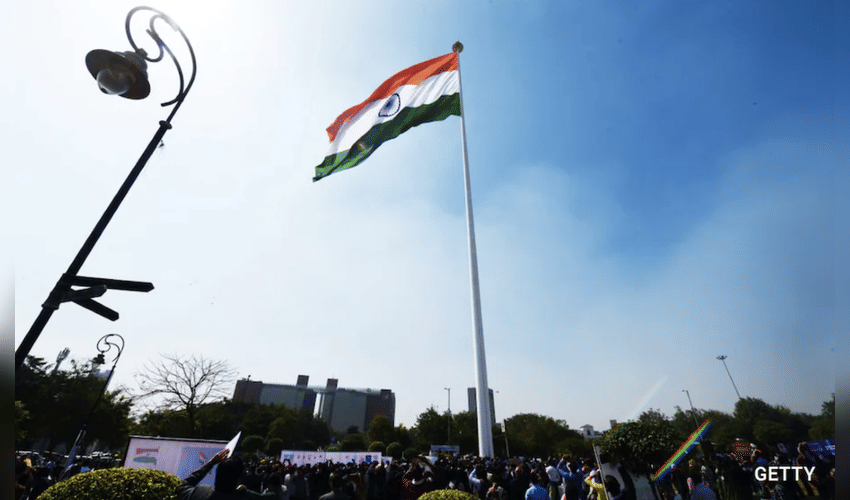

Eighty-four years after the Quit India Movement shook the foundations of British rule in India, the historic August 1942 uprising continues to hold an important place in the country's freedom struggle and national memory. The movement began on August 8, 1942, when the All India Congress Committee adopted the Quit India resolution in Bombay, now Mumbai. At the historic meeting at Gowalia Tank Maidan, Mahatma Gandhi gave his powerful call of "Do or Die", urging Indians to launch a decisive struggle for independence. The historic ground is today known as August Kranti Maidan.
The Quit India Movement emerged at a crucial moment in India's history. World War II was underway and Britain was seeking Indian support for the war. However, political leaders in India were increasingly demanding a clear commitment to independence. The failure of the Cripps Mission earlier in 1942 further deepened the political crisis. The proposals brought by Sir Stafford Cripps did not meet the Congress demand for immediate self-government, paving the way for a much more aggressive mass movement.
The British government moved quickly to suppress the agitation. On August 9, Gandhi and several other senior Congress leaders were arrested. Authorities expected that removing the movement's top leadership would prevent it from spreading. Instead, protests erupted across several parts of the country. Students, workers, farmers and ordinary citizens joined demonstrations and strikes. In several places, protesters challenged colonial authority by targeting government offices, railway infrastructure and communication networks. With senior leaders in prison, local organisers and underground groups played an increasingly important role in keeping the movement alive.
The British administration responded with widespread arrests, censorship and police action. Thousands of people were detained, while several protesters were killed or injured during the crackdown. Despite the repression, the movement demonstrated the growing determination among Indians to end colonial rule.
Women also played an important role in the movement. Aruna Asaf Ali became one of its most recognisable figures after hoisting the national flag at Gowalia Tank Maidan on August 9, following the arrest of senior Congress leaders. Her role later became closely associated with the resistance of 1942. The movement also brought several lesser-known freedom fighters into the national struggle. Across different parts of India, young people and local activists participated in protests, organised underground activities and faced imprisonment for opposing British rule. Their contribution remains an important part of the wider history of the Quit India Movement.
The slogan "Quit India" itself is widely associated with socialist leader Yusuf Meherally, who had earlier coined the slogan "Simon Go Back". Gandhi's "Do or Die" message subsequently became one of the defining phrases of the 1942 movement. Although the Quit India Movement was suppressed by the British authorities, it marked a significant stage in India's journey towards independence. The mass mobilisation showed the extent of public opposition to colonial rule and reinforced the demand that India should determine its own political future.
Independence eventually came on August 15, 1947, five years after the Quit India resolution. The country then faced an entirely different challenge: building a democratic and independent nation from the foundations left behind by colonial rule. That nation-building process continues decades later. The meaning of freedom has expanded beyond political independence to include economic opportunity, access to education, technological development, social security, good governance and equal participation in the country's growth.
For today's generation, the legacy of the Quit India Movement is therefore not limited to remembering the events of 1942. It also raises questions about the responsibilities that come with independence. Building strong institutions, creating opportunities for young people, protecting democratic values and ensuring that development reaches ordinary citizens remain important parts of India's continuing national journey. As the country marks 84 years of the Quit India Movement, the events of August 1942 serve as a reminder of a generation that demanded the right to shape its own future. The challenge for the present generation is to carry that legacy forward by strengthening the foundations of the independent India that those freedom fighters envisioned.



