



Military
US Sailors Reportedly Attempt to Go Overboard After 250 Days at Sea Amid Iran War Deployment
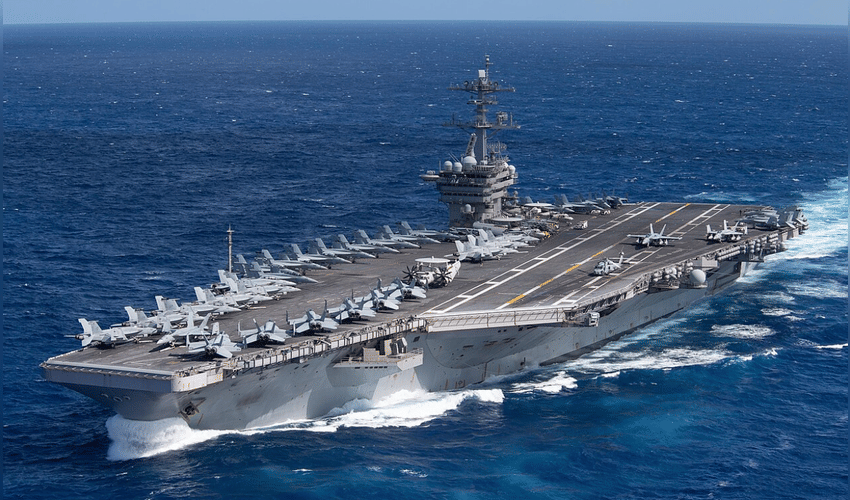

US sailors aboard the USS Abraham Lincoln are facing growing pressure after spending a record 250 consecutive days at sea as part of a deployment that was extended and redirected to the Middle East following the outbreak of war with Iran. The carrier, which carries around 5,000 sailors and Marines, departed San Diego on November 21 for what was initially expected to be a Pacific mission. The ship was later sent toward the Middle East, dramatically changing the nature and length of the deployment. Since leaving the United States, the crew has had only two short port visits, stopping in Guam in December and Oman in July.
The unusually long period at sea has raised serious concerns about sailors' mental health and morale. Reports from Navy Times, Stars and Stripes, The Guardian and Mint indicate that at least six sailors have reportedly attempted to go overboard during the nine-month deployment. In one reported incident, fellow crew members intervened and restrained a sailor before he could jump.
Families of sailors have also described receiving deeply worrying messages from their loved ones. Some relatives said sailors had expressed suicidal thoughts and feelings of hopelessness as the deployment continued without a definite end date. At a town hall in San Diego attended by about 200 family members, relatives directly confronted acting Navy Secretary Hung Cao and senior commanders over the situation. Annabelle Loma, whose husband serves aboard the carrier, said he attempted to jump overboard after repeated extensions to the deployment. She said he was increasingly worried that the prolonged mission was damaging the 13-year military career he had worked to build.
The concerns extend beyond the psychological pressure of combat deployment. Families and lawmakers have also raised allegations about deteriorating living conditions aboard the carrier. Congressman Mike Levin cited reports of mouldy showers, broken toilets, extended laundry outages and periods without hot water. He also referred to complaints about shortages of basic personal-care supplies, along with concerns about food and other necessities.
Some families have reported difficulties involving food, drinking water, mail and care packages. Sailors have reportedly spoken about exhaustion, declining morale and the frustration of not knowing when they will finally return home. The prolonged mission has also forced many service members to miss important family occasions, including weddings, funerals and other major events.
The US Navy has disputed claims that suicidal behaviour is increasing among the crew. Officials say sailors have continuous access to medical personnel, chaplains and deployment-resilience counsellors. Navy representatives have also maintained that the carrier has access to clean water, working air-conditioning systems and healthy meals.
The service has acknowledged the importance of mental-health support and said additional counsellors are being sent to assist sailors during the extended mission. However, the assurances have done little to eliminate concerns raised by families who say the length and uncertainty of the deployment are placing unprecedented pressure on their loved ones. The USS Abraham Lincoln is currently supporting US combat operations in the Arabian Sea under US Central Command. Its deployment has already exceeded modern records for consecutive days at sea, while the crew has supported more than 40 days of continuous combat missions.
The broader military situation is closely connected to the dispute over the Strait of Hormuz, a strategically vital waterway through which a significant share of global energy supplies passes. President Donald Trump has claimed that the United States maintains “total control” of the strait and has described the American naval presence as a “WALL OF STEEL.” Iran has rejected the US position and said the Strait of Hormuz will remain closed until its conditions are met. With tensions still high and no definite end date announced for the USS Abraham Lincoln's deployment, questions surrounding sailor welfare, morale and the psychological consequences of prolonged combat duty are likely to remain a major concern.
The situation highlights the human cost of extended military deployments. While aircraft carriers are designed to operate for long periods away from home, a deployment lasting hundreds of consecutive days can place extraordinary demands on service members and their families. For the sailors aboard the Lincoln, the uncertainty over when the mission will end may be proving just as difficult as the operational demands of the deployment itself.



