



World
Trump Cites Spain's Migrant Crisis as Warning for the US, Reviving Immigration Debate
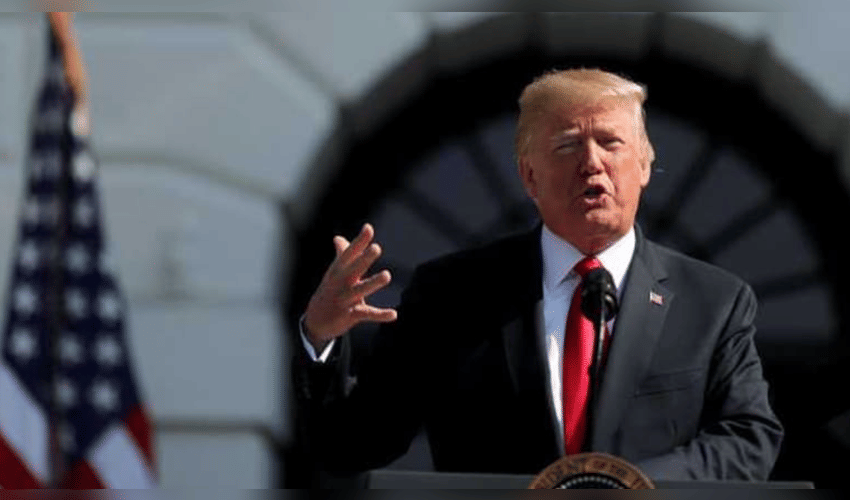

US President Donald Trump has once again placed immigration at the center of the political conversation, using Spain's recent migrant crisis as an example of what he believes could happen in the United States if border policies become less restrictive. Referring to widely shared images from Spain's North African enclave of Ceuta, Trump urged Americans to "remember that picture," suggesting that similar scenes could unfold at the US border under a different administration.
Trump made the remarks during a television interview while discussing immigration and border security, an issue that has remained one of the defining themes of his political career. He argued that the situation unfolding in Spain should serve as a warning for American voters, claiming that relaxed immigration policies could eventually lead to comparable challenges in the United States.
The comments came after thousands of migrants attempted to enter Ceuta, a small Spanish territory on the northern coast of Africa that shares a border with Morocco. As one of the European Union's external borders, Ceuta has long been a focal point for migration into Europe. The recent surge in arrivals has placed local authorities under pressure and reignited discussions across Europe about border management, asylum policies, and cooperation with neighboring countries.
By pointing to the developments in Ceuta, Trump sought to reinforce his long-standing argument that strong border enforcement is essential for national security and public safety. Immigration has been a cornerstone of his political messaging for years, and the latest events in Spain have provided fresh context for that narrative as political campaigning intensifies in the United States.
Supporters of Trump's position argue that governments must maintain firm control over their borders to manage illegal immigration effectively and ensure national security. They believe that countries facing large-scale irregular migration often struggle with housing, public services, and law enforcement if border systems become overwhelmed.
Critics, however, say that comparing Spain's migration challenges directly with those of the United States oversimplifies a much more complex issue. Migration experts point out that each region faces different geopolitical realities. Europe's migration patterns are shaped by conflicts in Africa and the Middle East, economic hardship, and regional instability, while migration along the US-Mexico border involves a distinct set of social, economic, and political factors. They argue that although border security is important, long-term solutions also require international cooperation, humanitarian policies, and efforts to address the root causes of migration.
The developments in Ceuta have once again highlighted the broader migration challenges confronting Europe. Countries across the European Union continue to debate how responsibility should be shared among member states while balancing humanitarian obligations with national security concerns. Similar discussions have also emerged in the United States, where immigration remains one of the most divisive political issues.
Trump's latest remarks demonstrate how international events are increasingly becoming part of domestic political campaigns. By drawing attention to Spain's migrant situation, he has sought to strengthen his message that stricter immigration controls are necessary to prevent similar scenarios in America. Whether voters agree with that comparison remains to be seen, but with immigration continuing to dominate political discussions on both sides of the Atlantic, the issue is likely to remain a key topic in the months ahead.