



News
The Supreme Court said managing religious bodies cannot lead to disorder in the Sabarimala case.
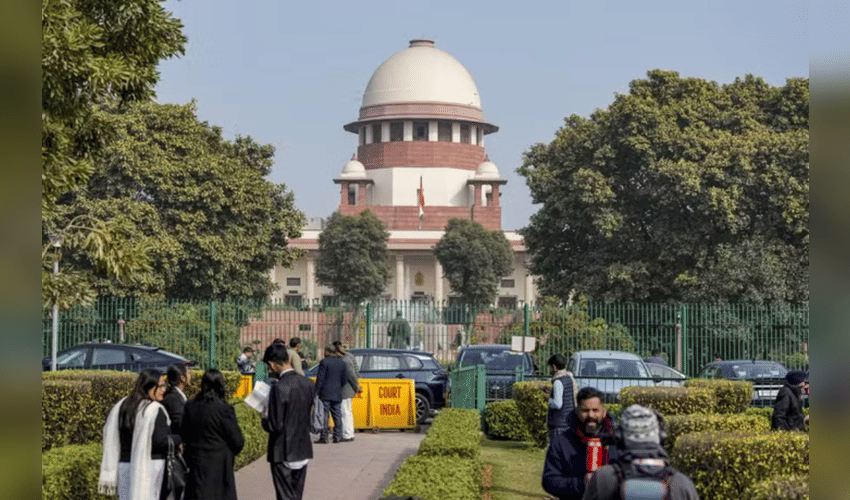

The Supreme Court on Tuesday said that the right to manage religious institutions cannot imply a lack of structure, stressing that proper systems and norms must govern their functioning. The observation came from a nine-judge Constitution bench during hearings on petitions concerning discrimination against women at places of worship, including the Sabarimala Temple, and the scope of religious freedom.
The bench, led by Chief Justice Surya Kant along with eight other judges, heard arguments from Advocate Nizam Pasha, who represented a petitioner linked to the Chishti Nizami lineage associated with the dargah of Hazrat Nizamuddin Aulia. He explained that dargahs hold deep significance in Sufi traditions, where saints are revered even after death, and argued that such traditions form a distinct religious denomination with the right to regulate entry.
Justice Ahsanuddin Amanullah emphasized that managing a religious place requires order and cannot result in chaos. He noted that institutions like temples or dargahs must follow established practices, rituals, and sequences, which need regulation by a responsible authority. However, he also underlined that such regulation must remain within constitutional limits and must not lead to discrimination.
The court is continuing to hear the matter. Earlier, it observed the difficulty in determining what constitutes essential religious practices. The issue traces back to a 2018 verdict in which a five-judge bench allowed women of all ages to enter the Sabarimala temple, declaring the previous restriction unconstitutional.



