



World
The Hangar at Bholari: How a 'White Lie' Sealed a Mission
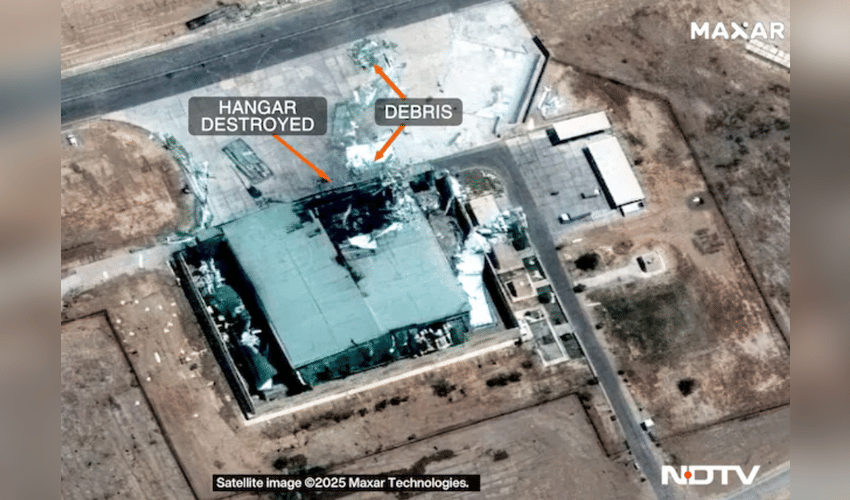

A revealing account of the Indian Air Force’s Operation Sindoor has shed light on the tense moments behind the strike on Pakistan’s Bholari Airbase, where a key military hangar was targeted during the May 2025 conflict. Air Marshal Nagesh Kapoor, who was serving as the commander of the South Western Air Command, recalled that the mission involved a carefully planned strike against a hangar believed to house a Pakistani Saab 2000 Erieye airborne early warning and control aircraft. The aircraft is designed to provide long-range surveillance and help coordinate air operations, making it a valuable military asset.
The mission was carried out on May 10, 2025, as India intensified strikes against Pakistani military installations during Operation Sindoor. Sukhoi-30 MKI fighter jets armed with air-launched BrahMos missiles were involved in the operation. According to Kapoor’s account, the mission reached a critical point when he received a call from Air Chief Marshal A.P. Singh. The Air Chief asked about the status of the aircraft involved in the operation. Kapoor told him that the aircraft were already getting airborne, although they actually needed around another 15 minutes before taking off.
Kapoor later described the decision as a “white lie” made during a high-pressure situation. His intention, according to his account, was to ensure that the aircraft could proceed with the mission after preparations had already been completed. The aircraft eventually took off and moved toward the designated launch area. After the missiles were fired, Kapoor informed the Air Chief that the mission had been completed and the aircraft were returning.
The strike caused substantial damage to the targeted hangar at Bholari. Satellite imagery released after the operation showed a large breach in the hangar roof and extensive damage around the structure. Later imagery indicated that repair and reconstruction work had begun at the facility. The importance of the target was linked to the possible presence of a Saab Erieye AEW&C aircraft. Such platforms are used for airborne surveillance, early warning and the coordination of fighter operations. Disabling one can therefore affect a wider air-defence network rather than simply removing a single aircraft from service.
The story took another turn when Kapoor later revealed the incident in the presence of Defence Minister Rajnath Singh and Air Chief Marshal A.P. Singh. Kapoor reportedly told the Air Chief that he had not been completely truthful about the timing of the aircraft’s departure. The Air Chief’s response was reportedly calm. He smiled and indicated that he already knew about the discrepancy.
The episode offers a rare glimpse into the decision-making involved in a live military operation. While the strike itself was enabled by aircraft, missiles and intelligence, its execution also depended on commanders making rapid decisions under considerable pressure. The Bholari operation was one element of the broader Indian military campaign during Operation Sindoor. The episode has since attracted attention not only because of the damage inflicted on the airbase but also because of the unusual command-room exchange that preceded the strike.
For observers of modern air warfare, the incident highlights an important reality: precision strikes depend not only on advanced weapons and intelligence but also on timing, judgement and the ability of commanders to make difficult decisions in rapidly changing circumstances.
Disclaimer: This image is taken from NDTV.



