



News
TCS 'conversion' case: Allegation surfaces that women were pressured to accompany them to hotels.
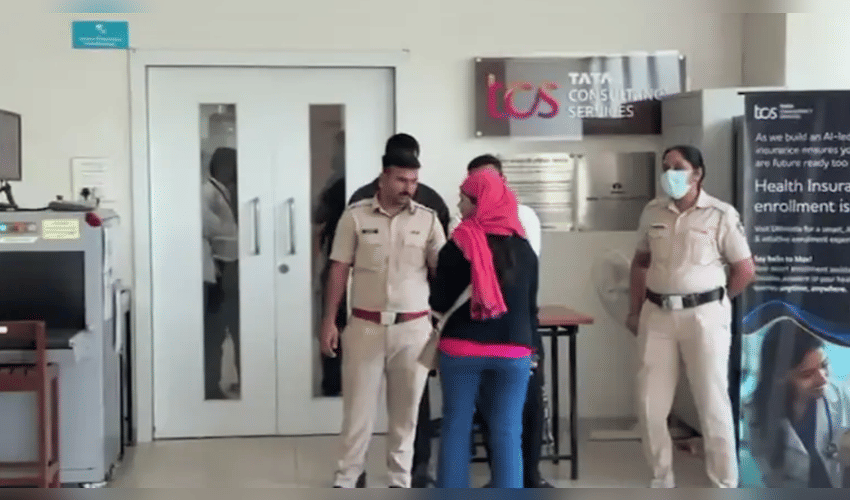

A former employee of Tata Consultancy Services (TCS) has come forward with fresh allegations in the ongoing “conversion” case, claiming that women colleagues at the company’s Nashik campus were repeatedly pressured by certain male staff members to join them in hotels and weekend outings. The claims, which have been taken up by Nashik police, add a new layer to an already sensitive investigation involving alleged religious coercion and workplace harassment within the tech giant.
According to the former employee, who worked with the Nashik office, a small group of male associates—including team leaders—used their position to create a hostile environment for young women joining the company. The witness alleges that women were often called to team‑leader desks, subjected to vulgar remarks, sexual innuendo, and ridicule of their religious or cultural practices.
The most serious allegation is that two colleagues, identified in the complaint as Danish and Raza, would book hotel stays and weekend getaways from within the office and then urge women to accompany them. The complainant says this was not presented as casual socialising, but as a subtle form of pressure that made those who refused feel isolated or professionally disadvantaged.
The case has come to be popularly described as a “conversion” matter because some of the allegations involve attempts to influence employees’ religious identity. The former employee claims that men in the group mocked Hindu rituals, questioned traditional attire such as sarees and bindis, and in some narratives pushed the idea of embracing another faith under the guise of “spiritual guidance”.
Critics argue that when religious counselling overlaps with sexual harassment and misuse of authority, it crosses from a personal‑faith issue into a serious workplace‑safety concern. Young employees, especially those from smaller towns or conservative backgrounds, may find it even harder to refuse such pressure when it is tied to their job security and team dynamics.
The former employee has described the Nashik campus as having a “toxic” culture, where women felt constantly monitored and uncomfortable. One detail cited in reports is the alleged requirement to leave phones, bags and even lunch boxes outside the office floor, which, it is claimed, was framed as a security measure but made it harder for employees to record or share instances of harassment.
She also says that when women raised objections to being asked to join weekend trips, they were either ridiculed in private or made to feel like they were “not fitting in” with the team. After leaving TCS, the former employee says she finally feels “safe”, highlighting how deeply the alleged behaviour affected her sense of personal and professional security.
Nashik police are reportedly examining nine complaints—filed by eight women employees—dating back to early 2 conquests up to March 2026. Several staff members, including some team leaders, have been arrested, and all accused employees have been suspended by TCS pending the outcome of the investigation. TCS has publicly stated that any misconduct will be dealt with strictly in line with its code of conduct and applicable laws. However, the case has reignited debate about how large IT firms, especially export‑oriented service companies, monitor workplace culture at regional campuses where local HR oversight can sometimes feel distant or diluted.
The TCS Nashik case could push the Indian IT sector to re‑evaluate how it monitors workplace culture beyond formal policies. Experts suggest that firms may need to: train HR teams to spot "soft" coercion, such as pressuring staff to join after‑hours outings; introduce anonymous digital grievance channels that bypass local managers; and conduct regular audits of smaller campuses, especially in Tier‑2 cities. The case also serves as a reminder to trust their instincts when office “bonding” starts to feel uncomfortable and to document patterns rather than treating incidents as one‑off events. The case may eventually become a reference point for how India’s tech industry balances growth, global client expectations, and the safety and dignity of its on‑the‑ground workforce.



