



Technology
SpaceX Rocket Expected to Impact the Moon as Astronomers Gear Up to Observe Rare Collision
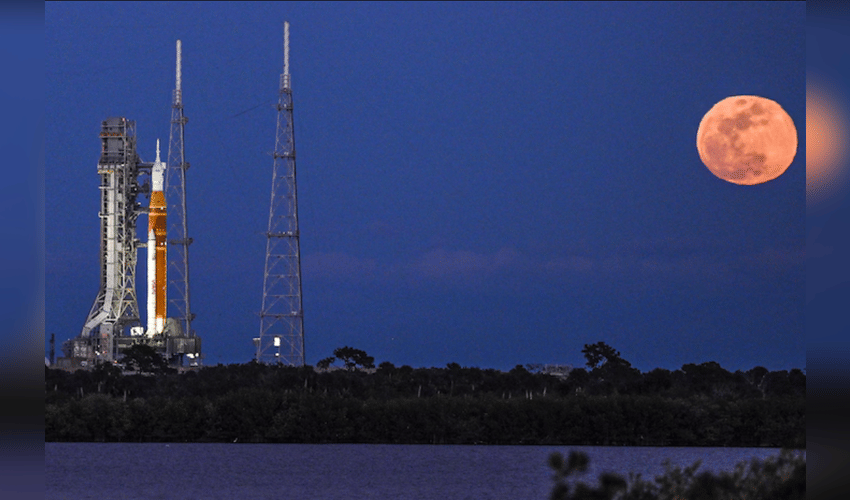

A discarded SpaceX Falcon 9 rocket stage is expected to slam into the Moon on Wednesday in an unusual event that has captured the attention of astronomers and space scientists. Although the collision was not planned, researchers believe it could provide valuable data about lunar impacts, space debris behaviour, and the risks associated with future missions to the lunar surface. The rocket stage, weighing around 3.9 tonnes, was left drifting in space after it helped launch Firefly Aerospace’s Blue Ghost-1 and Japan’s ispace Hakuto-R Mission 2 lunar landers in January 2025. According to scientists tracking its movement, the upper stage is likely to hit the Moon near the Einstein Crater, located on the Moon’s western limb, at a speed of nearly 8,700 kmph. The impact is expected at around 6:35 am UTC (12:05 pm IST) on August 5.
Unlike earlier lunar impacts that were deliberately carried out by space agencies for scientific studies, this collision is accidental. However, the fact that researchers know the rocket’s trajectory and approximate impact location in advance makes it a rare opportunity to study a real lunar crash as it unfolds. Astronomers and space agencies are preparing to observe the event using ground-based telescopes and lunar spacecraft. NASA’s Lunar Reconnaissance Orbiter and South Korea’s Danuri lunar orbiter are expected to capture images of the impact area before and after the collision, allowing scientists to examine the size of the crater and the spread of material thrown up from the surface.
Scientists estimate that the impact could create a crater around 27 metres (90 feet) wide and generate a massive cloud of lunar dust and debris. Because the Moon has almost no atmosphere, the dust plume could travel much higher and remain easier to track compared with similar impacts on Earth. Researchers expect the debris cloud to rise up to 100 kilometres above the lunar surface before gradually falling back.
The rocket stage ended up on a collision course with the Moon because it did not have enough remaining fuel for a controlled return after completing its mission. SpaceX’s Falcon 9 upper stages are normally guided back into Earth’s atmosphere after launch, where they burn up safely. The stage used for the lunar missions travelled much farther into space, leaving limited fuel for any further manoeuvres.
A study led by Benjamin Fernando of Los Alamos National Laboratory examined the rocket’s path and predicted that the abandoned stage would eventually intersect with the Moon’s orbit. Since the object was already travelling through a trajectory influenced by the Moon’s gravity, scientists were able to calculate where and when the collision would occur. For planetary researchers, the biggest scientific value of the event lies in studying the material thrown up after impact. The Moon’s lack of a thick atmosphere allows scientists to track ejecta — the rocks, dust and particles blasted outward during a collision — with much greater accuracy.
The observations could help improve computer models used to understand how impacts shape planetary surfaces. The findings may also help scientists prepare for future lunar exploration by improving predictions about how similar events could affect spacecraft, lunar bases, and other infrastructure. William Jo from the University of Texas at Austin said the event offers scientists a rare chance to study lunar ejecta behaviour and compare real observations with existing impact models.
The upcoming collision has also renewed discussions about space debris management beyond Earth’s orbit. As countries and private companies increase their focus on lunar exploration, experts warn that abandoned rocket parts and spacecraft could become a growing challenge around the Moon. NASA’s Artemis programme, China’s lunar missions, and commercial space ventures are expected to send more equipment toward the Moon in the coming years. With more activity in lunar space, scientists believe better tracking and responsible mission planning will become increasingly important.
While spacecraft have intentionally been crashed into the Moon in the past for research purposes, an uncontrolled impact involving a modern commercial rocket stage is a rare occurrence. Researchers hope this unexpected event will provide new insights that can help make future lunar exploration safer and more sustainable.



